
Pain Type & Treatment Matcher
Describe Your Pain
Select the options that best describe your experience.
Enter your details above
We will analyze your symptoms and provide a tailored treatment recommendation based on current medical understanding.
You take the pill. You wait the recommended thirty minutes. You check in with your body, expecting that sharp edge to dull or vanish entirely. Instead, the ache remains. It might be slightly quieter, but it is still there, stubborn and familiar. This experience is incredibly common, yet deeply frustrating. If you are reading this, you are likely wondering if you have been given the wrong medication, if your dosage is too low, or perhaps worse, if your pain is "all in your head."
None of those assumptions are true. The reality is that modern pain management is far more complex than a simple key-and-lock mechanism where one drug fits one symptom. When painkillers fail to provide complete relief, it is usually not because the medicine is broken, but because our understanding of how pain works has evolved beyond simple tissue damage. To find real relief, we need to look at why standard analgesics often fall short and what alternative strategies actually work.
The Myth of the Pain Switch
We tend to think of pain as a direct signal from an injury to the brain, like a telephone line ringing when someone picks up the receiver. In acute pain-say, cutting your finger while chopping vegetables-this model works perfectly. Nociceptors (pain receptors) detect heat, pressure, or chemical irritation and send a clear message: "Stop doing that, you are getting hurt."
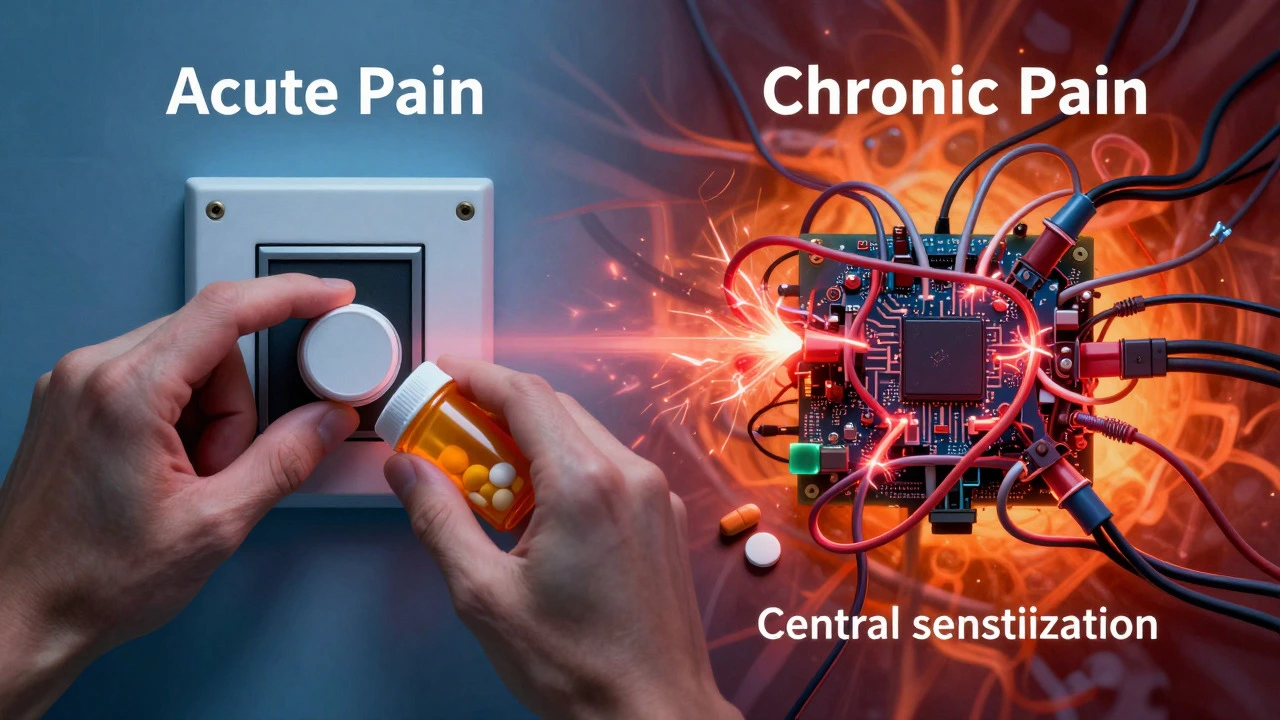
Opioids, NSAIDs (non-steroidal anti-inflammatory drugs), and acetaminophen are designed to interrupt this specific pathway. They block the production of inflammatory chemicals or dampen the signal before it reaches the brain. However, when pain persists for more than three to six months, it transitions into chronic pain. At this stage, the telephone line doesn't just ring; it starts playing music on its own. The nervous system itself becomes the source of the problem, not just the messenger.
This phenomenon is known as central sensitization. Your spinal cord and brain amplify signals, interpreting normal sensations as painful. Standard painkillers target peripheral inflammation or block specific receptors, but they do not reset the amplified volume knob in your central nervous system. That is why you can take a strong dose of ibuprofen or codeine and still feel the burn. The drug is working on the periphery, but the fire is burning in the wiring.
Not All Pain Is Created Equal
One of the biggest reasons patients feel their medication isn't working is a mismatch between the type of pain they have and the class of drug they are taking. Pain is generally categorized into two main types: nociceptive and neuropathic. Treating them requires completely different tools.
| Pain Type | Source | Sensation | First-Line Medication | Common Failure Reason |
|---|---|---|---|---|
| Nociceptive | Tissue damage (muscles, bones) | Aching, throbbing, soreness | NSAIDs, Opioids | Inflammation has resolved, but sensitivity remains |
| Neuropathic | Nerve damage/compression | Burning, shooting, electric shocks | Anticonvulsants, Antidepressants | Patient takes NSAIDs/Opioids instead of nerve agents |
| Nociplastic | Central processing error | Widespread, diffuse, hard to localize | Cognitive Behavioral Therapy, Exercise | No structural target for drugs to fix |
If you have sciatica, diabetic neuropathy, or post-herpetic neuralgia, you are dealing with neuropathic pain. Nerves that are damaged or compressed misfire constantly. Ibuprofen does almost nothing here because there is no significant inflammation to stop. Studies consistently show that opioids have limited efficacy for neuropathic conditions. Instead, medications originally developed for epilepsy (gabapentin, pregabalin) or depression (duloxetine, amitriptyline) are the gold standard. These drugs calm the hyperexcitable nerves by altering neurotransmitter levels. If you are taking standard painkillers for nerve pain, you are essentially using a hammer to fix a computer glitch.

The Tolerance Trap
Another critical factor is opioid tolerance and hyperalgesia. If you have been taking opioid-based painkillers regularly for weeks or months, your body adapts. The receptors in your brain become less sensitive to the drug, requiring higher doses to achieve the same effect. But there is a darker side to this adaptation called opioid-induced hyperalgesia (OIH).
Paradoxically, long-term opioid use can make you *more* sensitive to pain. The drugs alter the way your nervous system processes stimuli, lowering your pain threshold. So, you take more pills, which increases the sensitization, which makes the pain worse, leading you to take even more pills. It is a vicious cycle that explains why many chronic pain patients feel their medication is failing despite high dosages. Breaking this cycle often involves carefully tapering off opioids under medical supervision and switching to non-opioid strategies.
The Biopsychosocial Model: Why Mood Matters
This section often causes the most pushback, but it is scientifically undeniable: your emotional state directly influences your physical pain perception. This is not about "faking it" or having weak willpower. It is about neurobiology. The same brain regions that process emotions (the amygdala and anterior cingulate cortex) also process pain signals.
Stress, anxiety, and depression release cortisol and other stress hormones that keep your nervous system in a state of high alert. When your body is stressed, it interprets ambiguous signals as threats. A mild ache becomes a severe crisis. This is why sleep deprivation dramatically increases pain sensitivity. Poor sleep reduces the brain's ability to filter out irrelevant sensory data. If you are exhausted and anxious, your "volume knob" is stuck at maximum. No amount of ibuprofen can turn it down if the stress response is driving the noise.
This is why Cognitive Behavioral Therapy (CBT) for pain is considered a first-line treatment by major health organizations like the CDC and NICE guidelines. CBT doesn't cure the underlying arthritis or back injury, but it retrains the brain's response to pain signals, reducing the suffering component and improving function.

Multimodal Therapy: The Real Solution
So, what do you do when the pills don't work? The answer lies in multimodal pain management. This approach rejects the idea of a "magic bullet" drug and instead uses a combination of therapies to attack pain from multiple angles. Think of it like home security: you don't just rely on a lock; you have alarms, cameras, and motion sensors.
- Pharmacological: Use the right drug for the right pain type. For nerve pain, use gabapentinoids or SNRIs. For inflammatory pain, use targeted NSAIDs or corticosteroids. Avoid long-term opioids unless absolutely necessary.
- Physical: Gentle, graded exercise strengthens muscles that support joints and releases endorphins, the body's natural painkillers. Physiotherapy helps restore movement patterns that may have changed due to pain avoidance.
- Psychological: Mindfulness, meditation, and CBT help regulate the emotional response to pain, reducing central sensitization.
- Interventional: Injections, nerve blocks, or radiofrequency ablation can target specific sources of pain when oral meds fail.
For example, a patient with chronic lower back pain might combine a short course of muscle relaxants, weekly physiotherapy sessions to strengthen core stability, and mindfulness training to manage stress-related tension. This holistic approach addresses the biological, mechanical, and psychological components of pain simultaneously.
When to Seek a Second Opinion
If your current treatment plan relies solely on increasing the dosage of a single medication without addressing other factors, it is time to seek a second opinion. Look for a specialist in pain medicine rather than a general practitioner. Pain specialists are trained to differentiate between nociceptive, neuropathic, and nociplastic pain and can design a multimodal plan tailored to your specific physiology.
Keep a detailed pain diary. Note not just the intensity (1-10 scale), but the quality (burning, aching, stabbing), timing, and triggers (stress, activity, weather). This data is invaluable for your doctor to identify patterns and adjust treatments effectively. Remember, feeling pain after taking medication is not a personal failure. It is a signal that your current strategy needs refinement. By understanding the complex nature of chronic pain, you can move from frustration to empowered action.
Why do opioids stop working for chronic pain?
Opioids can lead to tolerance, where higher doses are needed for the same effect. More dangerously, they can cause opioid-induced hyperalgesia, making the nervous system more sensitive to pain over time. They also do not address the root causes of neuropathic or inflammatory pain.
What is the best medication for nerve pain?
Standard painkillers like ibuprofen are ineffective for nerve pain. First-line treatments include anticonvulsants like gabapentin and pregabalin, or antidepressants like duloxetine and amitriptyline, which calm hyperactive nerves.
Can stress make my pain worse?
Yes. Stress activates the sympathetic nervous system, which lowers pain thresholds and amplifies signals. Anxiety and poor sleep further contribute to central sensitization, making physical pain feel more intense.
What is multimodal pain management?
It is a comprehensive approach that combines medications, physical therapy, psychological support, and lifestyle changes to treat pain from multiple angles, rather than relying on a single drug.
Should I increase my painkiller dose if it doesn't work?
No. Increasing the dose without medical advice can lead to dangerous side effects and tolerance. If a medication isn't providing relief, it likely indicates a mismatch between the drug type and your pain condition, requiring a change in strategy rather than dosage.