

NHS Waiting Time Calculator
Calculate Your Waiting Time
Key Statistics
Estimated Waiting Time
--
--
Private Healthcare Alternative
Typical wait time: 2-4 weeks
Estimated cost: £1,500-£4,000
Prescription costs: £9.95 per item (England)
Anyone who’s waited weeks for a specialist appointment or sat in an A&E waiting room for hours knows the UK’s healthcare system has serious cracks. The NHS was built on a simple promise: healthcare free at the point of use, funded by taxes. That ideal still exists - but the reality? It’s stretched thin. Millions rely on it every day, and while it saves lives, the system is failing in ways that are becoming impossible to ignore.
Long waiting times are the norm, not the exception
If you need a non-emergency procedure, don’t expect quick results. As of early 2026, over 7.5 million people in England were waiting for routine hospital treatment - the highest number ever recorded. For some surgeries, like hip replacements or cataract operations, patients wait over a year. Mental health referrals take even longer: nearly 40% of people wait more than 18 weeks just to speak with a therapist. These aren’t rare cases. They’re standard.
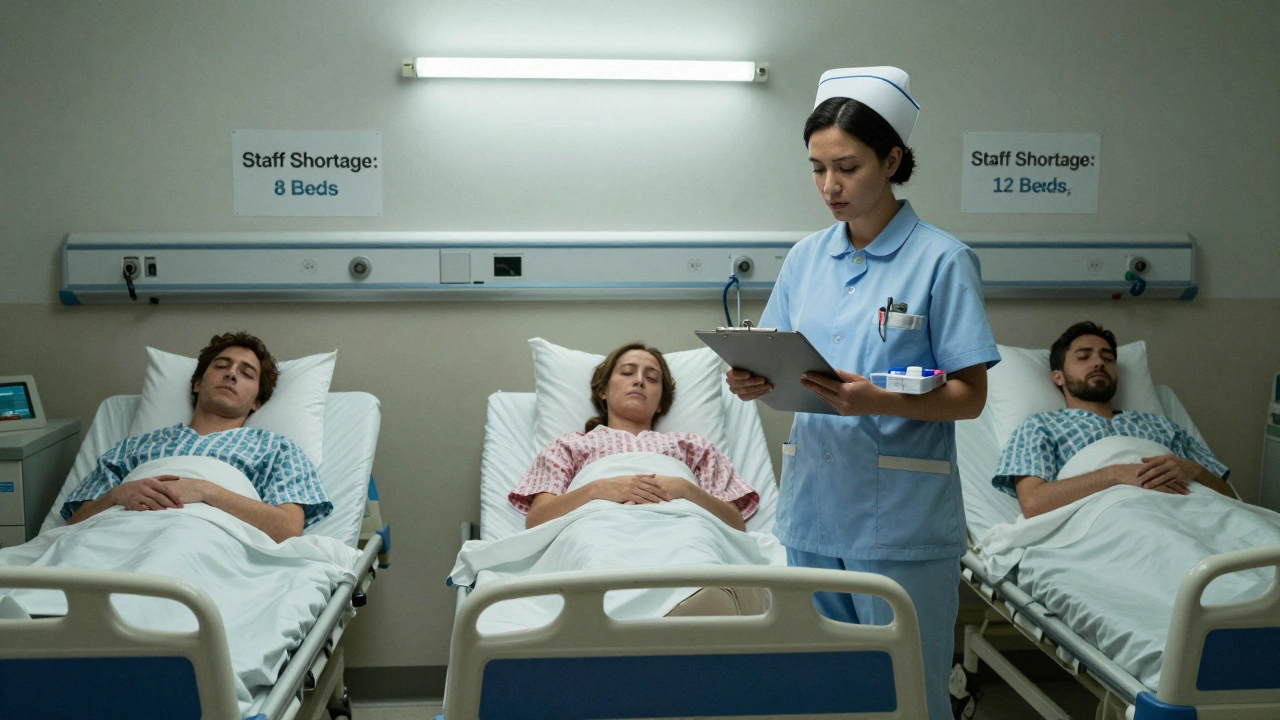
Why? It’s not just about more patients. It’s about fewer staff. The NHS has over 100,000 vacant positions - from nurses to radiologists. Hospitals are running on skeleton crews. One nurse in Manchester told me she’s responsible for 12 patients on a ward designed for eight. No one can keep up.
Funding hasn’t kept up with demand
The NHS budget grows slowly, but costs keep climbing. Inflation, aging populations, and new medical technologies mean the system needs more money every year. Yet real-terms funding per person has barely changed since 2010. Adjusted for inflation, the NHS has lost about 12% of its purchasing power over the last decade.
When budgets are tight, tough choices follow. Outdated equipment stays in use. Ambulances sit idle because there aren’t enough paramedics to staff them. Community health centers close in rural areas because they can’t afford to stay open. You can’t run a modern healthcare system with 1990s infrastructure and 2020s demand.
Staff burnout is destroying morale
NHS workers aren’t just tired - they’re broken. A 2025 survey found that 68% of frontline staff were considering leaving their jobs within the next year. Nurses, paramedics, and GPs are working 60-hour weeks just to cover shifts. Many say they’re emotionally drained, unable to give patients the time they need.
It’s not just about pay. Pay for NHS staff has fallen 18% since 2010 when adjusted for inflation. Meanwhile, private sector healthcare roles offer better conditions and higher salaries. Why stay? Many do out of loyalty. But that loyalty is running out.
Access is uneven - geography matters
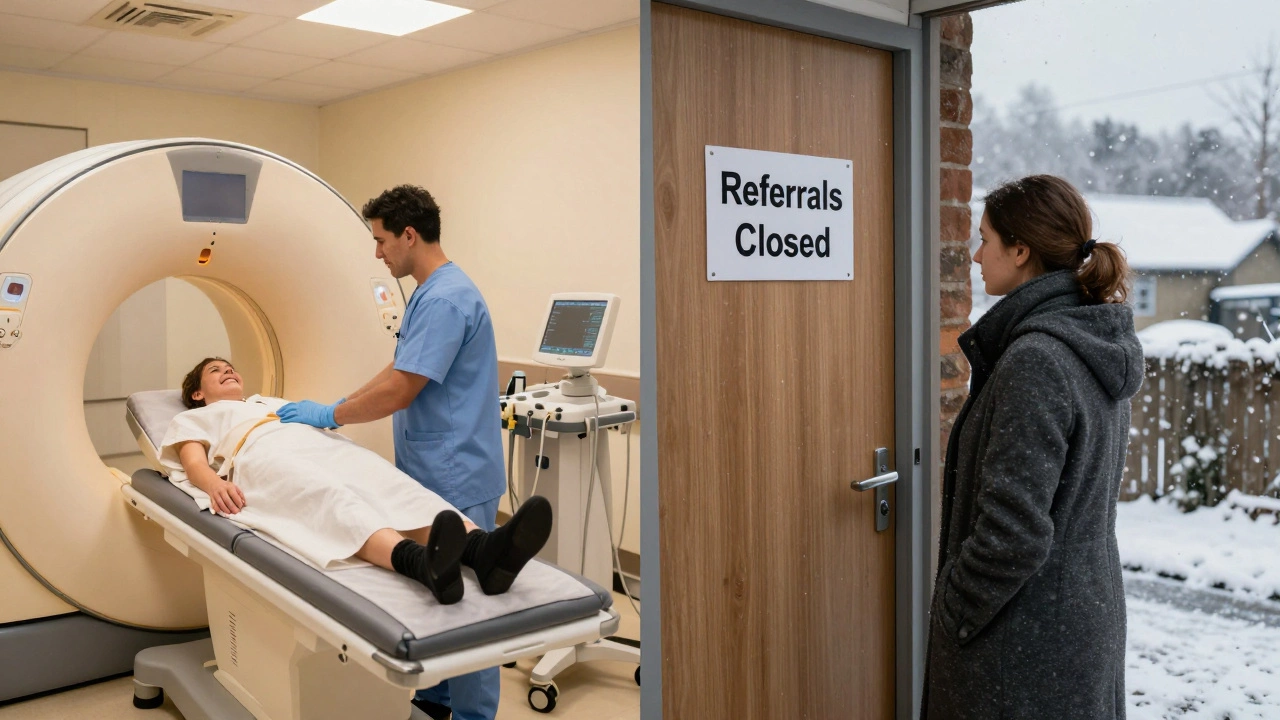
If you live in London, you might get an MRI scan in six weeks. If you live in rural Wales or Northern Ireland, you might wait six months. This isn’t random. It’s systemic. Urban areas get more funding, more staff, and better tech. Rural areas get leftovers.
One woman in Cumbria told me she had to drive 80 miles to the nearest specialist for her chronic back pain. Her GP said they couldn’t refer her because the waiting list was full. She ended up paying out of pocket for private treatment - something most people can’t afford.
Prescriptions and hidden costs
Yes, prescriptions are free in England for under-16s, over-60s, and those with certain conditions. But for everyone else? £9.95 per item. That adds up fast. A person managing diabetes might need three prescriptions a month. That’s nearly £300 a year - a big chunk for low-income families.
And then there are the hidden costs: travel to appointments, parking fees, time off work, childcare. One working mother in Birmingham said she lost two days of pay last year just to get her son’s ear infection checked. The NHS doesn’t charge for care - but it still costs you.
Private care is the escape hatch - for those who can afford it
Over 1.5 million people in the UK now have private health insurance. Why? Because they’ve given up on the NHS. Private care means faster scans, shorter waits, and better facilities. But here’s the problem: it’s not a solution. It’s a Band-Aid on a broken system.
When more people leave the NHS for private care, the public system loses revenue, staff, and political attention. The cycle gets worse. The NHS becomes a system for those who can’t afford better - and that’s not fair.
It’s not all bad - but it’s not working
The NHS still delivers miracles. It saved lives during the pandemic. It provides free cancer screenings, maternity care, and emergency treatment to everyone. No other country with a similar economy offers that. But miracles aren’t enough. A system that relies on heroics, not structure, is a system that’s failing.
People aren’t asking for luxury care. They’re asking for timely care. For consistent care. For care that doesn’t depend on where you live or how much you earn. The UK healthcare system was built on dignity. Today, it’s running on fumes.
Why is the NHS so slow?
The NHS is slow because it’s underfunded, understaffed, and overwhelmed. Over 7.5 million people are waiting for treatment, while over 100,000 positions remain unfilled. Budgets haven’t kept up with rising demand, aging populations, and inflation. Staff burnout and long hours mean fewer people are available to deliver care - so delays pile up.
Is the NHS free for everyone?
Yes, in theory. NHS care is free at the point of use for UK residents. But there are exceptions. Prescription charges apply in England (unless you qualify for an exemption), dental care has fees, and optical services aren’t fully covered. Non-residents, like tourists or recent immigrants without status, may be charged for treatment. The system is designed to be universal, but hidden costs and eligibility rules create gaps.
How does the UK healthcare system compare to other countries?
The UK ranks near the top in equity - everyone gets care regardless of income. But it lags behind countries like Germany, Switzerland, and the Netherlands in speed and efficiency. These countries spend more per person, but get faster access, better outcomes, and higher patient satisfaction. The UK spends less than most OECD nations, but still covers everyone. The trade-off is time and capacity.
Can private healthcare fix NHS problems?
No - it makes them worse. When people use private care, they leave the NHS system, reducing its funding and political priority. Private providers don’t absorb the overflow; they serve a separate, wealthier population. This creates a two-tier system: one for those who can pay, and one for everyone else. It doesn’t solve the root problems - underfunding and staffing shortages - it just lets some people escape them.
What’s being done to fix the NHS?
The government has pledged £10 billion in extra funding over the next two years, mostly for backlog clearance and mental health services. New recruitment drives aim to bring in 20,000 more nurses and 10,000 more GPs. But past promises have fallen short. Without major structural changes - like reducing bureaucracy, modernizing IT, and increasing wages - these measures won’t be enough. Real reform requires political will, not just money.