

Fertility Treatment Pathway & Success Estimator
Your Profile
Enter your details to see estimated success rates and recommended treatment pathways.
Trying to conceive can feel like navigating a maze without a map. You track your cycles, adjust your diet, and maybe even start taking supplements, but the positive test just doesn’t appear. When that disappointment sets in, the question shifts from "why isn't this happening?" to "what is the best fertility treatment to get pregnant?" The answer isn't one-size-fits-all. It depends on your age, the cause of infertility, and how long you’ve been trying.
There is no single "best" treatment for everyone. For some, simple lifestyle changes or timed intercourse are enough. For others, advanced procedures like In Vitro Fertilization (IVF) are the only path to parenthood. This guide breaks down the options from least to most invasive, helping you understand what works, when it works, and what to expect.
Understanding Infertility: Before You Start Treatment
Before jumping into medical interventions, it’s crucial to understand why conception hasn’t happened yet. Infertility is defined as the inability to conceive after 12 months of regular, unprotected sex (or six months if you’re over 35). About one-third of cases are due to female factors, one-third to male factors, and one-third to combined or unexplained causes.
Common female factors include ovulation disorders like polycystic ovary syndrome (PCOS), blocked fallopian tubes, endometriosis, or uterine fibroids. Male factors often involve low sperm count, poor sperm motility, or abnormal sperm morphology. If you haven’t had a basic fertility workup-including blood tests for hormone levels, an ultrasound to check ovarian reserve, and a semen analysis for your partner-you should start there. Treating the symptom without knowing the cause is like fixing a leaky roof by mopping the floor.
Step 1: Lifestyle Changes and Timed Intercourse
For many couples, especially those under 35 with no identified issues, the first line of defense is optimizing natural conception. This isn’t just about having sex more; it’s about having sex at the right time and creating a healthy environment for conception.
- Track Your Ovulation: Use ovulation predictor kits (OPKs) or monitor cervical mucus to identify your fertile window. Sperm can survive up to five days in the reproductive tract, but the egg only lives for 12-24 hours. Having intercourse every other day during this window maximizes your chances.
- Maintain a Healthy Weight: Being significantly underweight or overweight can disrupt hormone balance and ovulation. Even a 5-10% weight loss in women with PCOS can restore spontaneous ovulation.
- Avoid Toxins: Smoking, excessive alcohol, and recreational drugs lower fertility in both men and women. Men should avoid hot tubs and saunas, as heat reduces sperm production.
- Supplements: Prenatal vitamins with folic acid are essential for preventing neural tube defects. Some studies suggest CoQ10 may improve egg quality in older women, though evidence is mixed.
If you’ve been doing this for 6-12 months (or 3-6 months if over 35) without success, it’s time to move to medical intervention.
Step 2: Oral Medications and Ovulation Induction
If the issue is irregular or absent ovulation, oral medications are often the first medical step. These drugs stimulate the ovaries to release eggs.
Clomiphene Citrate (Clomid) is a selective estrogen receptor modulator that tricks the brain into producing more follicle-stimulating hormone (FSH), encouraging ovulation. It’s been used since the 1960s and is effective for women with PCOS. However, it can thin the uterine lining and dry up cervical mucus, which might make it harder for sperm to reach the egg. Success rates are around 10-20% per cycle, with cumulative rates rising over 3-6 cycles.
Letrozole (Femara) has emerged as a preferred alternative for PCOS patients. Originally a breast cancer drug, it inhibits estrogen production, leading to a similar surge in FSH. Studies show Letrozole may have higher live birth rates than Clomid for women with PCOS because it doesn’t negatively impact the uterine lining or cervical mucus.
These medications are usually monitored with ultrasounds to ensure multiple eggs aren’t developing (which increases the risk of twins or triplets) and to time intercourse precisely.
Step 3: Intrauterine Insemination (IUI)
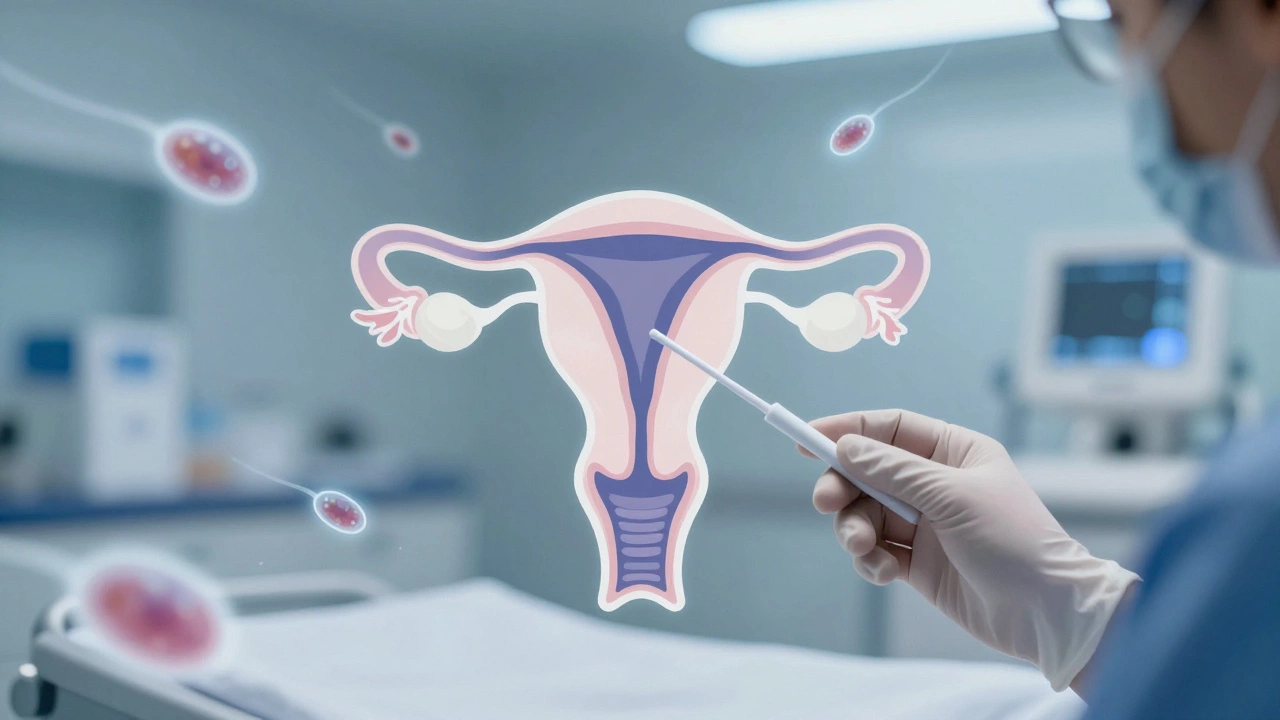
If ovulation induction alone doesn’t work, or if there are mild male factor issues (like slightly low sperm count), doctors often recommend Intrauterine Insemination (IUI). Also known as artificial insemination, IUI involves washing and concentrating sperm in the lab, then placing it directly into the uterus around the time of ovulation.
This bypasses potential barriers like hostile cervical mucus or short ejaculate volume. It’s less invasive and cheaper than IVF. Success rates vary widely but average 10-20% per cycle for women under 35. For women over 40, success rates drop significantly, often below 5% per cycle. Most doctors recommend 3-6 IUI cycles before moving to IVF, as repeated failures indicate diminishing returns.
Step 4: In Vitro Fertilization (IVF)
When simpler methods fail, or if there are severe factors like blocked tubes, severe endometriosis, or significant male factor infertility, IVF is the gold standard. It’s also the most effective treatment for age-related infertility.
The process involves several steps:
- Ovarian Stimulation: Injectable hormones (FSH/LH) stimulate the ovaries to produce multiple eggs over 8-14 days.
- Egg Retrieval: A minor surgical procedure uses a needle guided by ultrasound to collect mature eggs from the ovaries.
- Fertilization: Eggs are mixed with sperm in a lab dish. If sperm quality is very poor, Intracytoplasmic Sperm Injection (ICSI) is used, where a single sperm is injected directly into each egg.
- Embryo Culture: Embryos grow for 3-5 days. Day 5 embryos (blastocysts) have higher implantation potential.
- Transfer: One or two embryos are placed into the uterus using a thin catheter.
Success rates depend heavily on age. According to data from the Centers for Disease Control and Prevention (CDC) and international registries:
- Under 35: 40-50% chance of live birth per embryo transfer.
- 35-37: 30-40% chance.
- 38-40: 20-30% chance.
- Over 40: 5-15% chance, dropping sharply after 42.
IVF is physically demanding, emotionally taxing, and expensive. But for many, it’s the difference between dreaming of a child and holding one.
Specialized IVF Techniques
Not all IVF is the same. Several advanced techniques can improve outcomes for specific challenges:
| Technique | Best For | How It Works |
|---|---|---|
| ICSI | Severe male factor infertility | Single sperm injected directly into egg |
| PGT-A | Recurrent miscarriage, advanced maternal age | Genetic testing of embryos to select chromosomally normal ones |
| Frozen Embryo Transfer (FET) | High estrogen levels, endometriosis | Embryos frozen after retrieval and transferred in a later, prepared cycle |
| Egg Freezing | Women delaying childbirth | Eggs retrieved and frozen for future use |
Preimplantation Genetic Testing for Aneuploidy (PGT-A) screens embryos for chromosomal abnormalities. While it doesn’t increase the total number of babies born, it can reduce the time to pregnancy and lower miscarriage rates by ensuring only healthy embryos are transferred. It’s particularly valuable for women over 38, where chromosomal errors in eggs become common.
Alternative Options: Donor Gametes and Surrogacy
If your own eggs or sperm aren’t viable, donor options open new doors. Egg donation involves using eggs from a younger donor, which dramatically improves success rates for older women or those with diminished ovarian reserve. Sperm donation is common for single women, same-sex male couples, or men with azoospermia (no sperm).
Surrogacy is an option when a woman cannot carry a pregnancy due to uterine absence, severe health risks, or recurrent implantation failure. A gestational surrogate carries the embryo created from the intended parents’ (or donors’) gametes. This is complex legally and emotionally, requiring careful counseling and legal contracts.
Choosing the Right Clinic and Doctor
The "best" treatment also depends on the skill of the clinic and doctor. Look for clinics with high transparency in reporting success rates. Ask about their lab accreditation, embryologist experience, and whether they offer genetic testing. Personal rapport matters too-you’ll be working closely with this team for months or years.
Cost is a major factor. In the US, one IVF cycle can cost $12,000-$20,000 plus medications. In countries like Australia, Canada, or parts of Europe, public healthcare systems may cover some costs. Always ask about package deals, refund programs (where you pay upfront for multiple cycles), and financing options.
Emotional and Mental Health Support
Fertility treatment is a rollercoaster. The hormonal fluctuations, financial stress, and uncertainty take a toll. Don’t underestimate the importance of mental health support. Consider joining a support group, seeing a therapist specializing in infertility, or practicing mindfulness and stress-reduction techniques. A calm mind supports a resilient body.
What is the most successful fertility treatment?
In Vitro Fertilization (IVF) has the highest success rates per cycle, especially for women under 35. However, "success" depends on individual factors. For young women with unexplained infertility, IUI might be tried first due to lower cost and invasiveness. For women over 40, IVF with PGT-A offers the best chance of a live birth.
How long does it take to get pregnant with fertility treatment?
It varies. Oral medications and IUI cycles last about one month each, and many try 3-6 cycles. IVF takes about 2-3 weeks from stimulation to transfer, plus two weeks for the pregnancy test. Cumulative success rates increase over multiple cycles, so patience is key.
Is IVF painful?
The injections can cause bruising and discomfort. Egg retrieval is done under sedation, so you won’t feel pain during the procedure, but you may have cramping afterward. The emotional stress is often cited as more challenging than the physical aspects.
Can I get pregnant naturally after failed IVF?
Yes, some women conceive naturally after IVF treatments, possibly due to residual effects of medications or improved timing awareness. However, if IVF failed due to severe factors like blocked tubes, natural conception is unlikely.
What age is too late for fertility treatment?
There’s no strict cutoff, but success rates decline significantly after 40 and drop sharply after 42. Using donor eggs can extend possibilities well into the 40s and early 50s, depending on health and local regulations.