

The 5 C's Resilience Self-Assessment
Your Assessment Results
Overall Score
0/50
Area for Focus
-
This is your lowest-rated area.
Actionable Advice
Have you ever felt like your mind was a tangled knot of anxiety, stress, and uncertainty? You are not alone. In the rush of modern life, we often treat our mental well-being as an afterthought until something breaks. But what if there was a simple framework-a set of five core pillars-that could help you untangle that knot and build genuine resilience?
The 5 C's of mental health provide exactly that. They are not just buzzwords; they are practical tools rooted in psychological science, specifically drawing from Cognitive Behavioral Therapy (CBT) and positive psychology. These concepts help us understand how we think, feel, and react to the world around us.
1. Competence: Believing You Can Handle It
Competence isn't about being perfect or knowing everything. It’s about feeling capable. When you face a challenge-whether it’s a difficult conversation at work or managing a household budget-competence is that quiet voice saying, "I have dealt with hard things before, and I can handle this too."
This pillar is deeply tied to self-efficacy, a concept popularized by psychologist Albert Bandura. Self-efficacy is your belief in your ability to succeed in specific situations. Without it, even small tasks can feel insurmountable. With it, you approach problems as puzzles to be solved rather than threats to be feared.
- Build it through small wins: Break big goals into tiny, manageable steps. Completing them releases dopamine, reinforcing the belief that you are effective.
- Skill acquisition: Learning new skills, even simple ones like cooking a meal or fixing a leaky tap, boosts your sense of competence.
- Avoid comparison: Comparing your behind-the-scenes to someone else’s highlight reel erodes competence. Focus on your own progress.
2. Confidence: Trusting Your Worth
If competence is about *doing*, confidence is about *being*. It’s the internal assurance that you matter, that your thoughts and feelings are valid, and that you deserve respect. Low confidence often leads to people-pleasing, anxiety, and a fear of rejection.
Confidence grows when your actions align with your values. It’s not about arrogance; it’s about self-respect. When you say "no" to something that drains you, or when you advocate for yourself in a relationship, you are practicing confidence.
Think of confidence as a muscle. If you never use it, it atrophies. Start small. Share an opinion in a meeting. Wear an outfit that makes you feel good. Each act of self-affirmation strengthens this pillar.
3. Connection: The Power of Belonging
Humans are wired for connection. We are social creatures, and isolation is one of the biggest risks to mental health. Connection doesn’t mean having hundreds of friends or being the life of the party. It means having at least one or two people with whom you can be completely honest-vulnerable, even.
Research consistently shows that strong social ties buffer against stress. When you share your burdens, they become lighter. This pillar emphasizes quality over quantity. A deep, trusting conversation with a friend is more healing than scrolling through superficial interactions on social media.
- Active listening: Be present when others speak. Put down the phone. Eye contact matters.
- Vulnerability: Share your struggles. You’ll often find others relate, which deepens bonds.
- Community involvement: Join clubs, volunteer groups, or classes. Shared interests create natural connections.
4. Character: Living with Integrity
Character refers to your moral compass and personal values. It’s about knowing what stands for and acting accordingly. When your daily life aligns with your core values-such as honesty, kindness, or fairness-you experience less cognitive dissonance and greater inner peace.
Without a strong sense of character, it’s easy to drift, making decisions based on fleeting emotions or external pressures. This can lead to regret and a loss of identity. Reflect on what truly matters to you. Is it family? Creativity? Justice? Let these values guide your choices.
Living with integrity doesn’t mean you’re flawless. It means you acknowledge your mistakes, make amends, and strive to do better. This authenticity builds trust with others and, crucially, with yourself.
5. Coping: Managing Stress Effectively
Coping is the toolkit you use when life gets tough. Everyone faces adversity-loss, failure, illness. The difference between those who crumble and those who bounce back lies in their coping strategies. Healthy coping mechanisms help you process emotions without being overwhelmed by them.
Unhealthy coping includes avoidance, substance abuse, or numbing out with screens. Healthy coping involves facing reality while managing the emotional impact. This might look like journaling, exercising, meditating, or talking to a therapist.
| Strategy | Healthy Coping | Unhealthy Coping |
|---|---|---|
| Emotional Release | Jouraling, crying, talking to a friend | Bottling up emotions, explosive anger |
| Physical Activity | Walking, yoga, running | Overtraining to exhaustion |
| Mindfulness | Meditation, deep breathing | Doomscrolling, binge-watching TV |
| Social Support | Seeking advice, venting safely | Isolating, relying on toxic relationships |

How the 5 C's Work Together
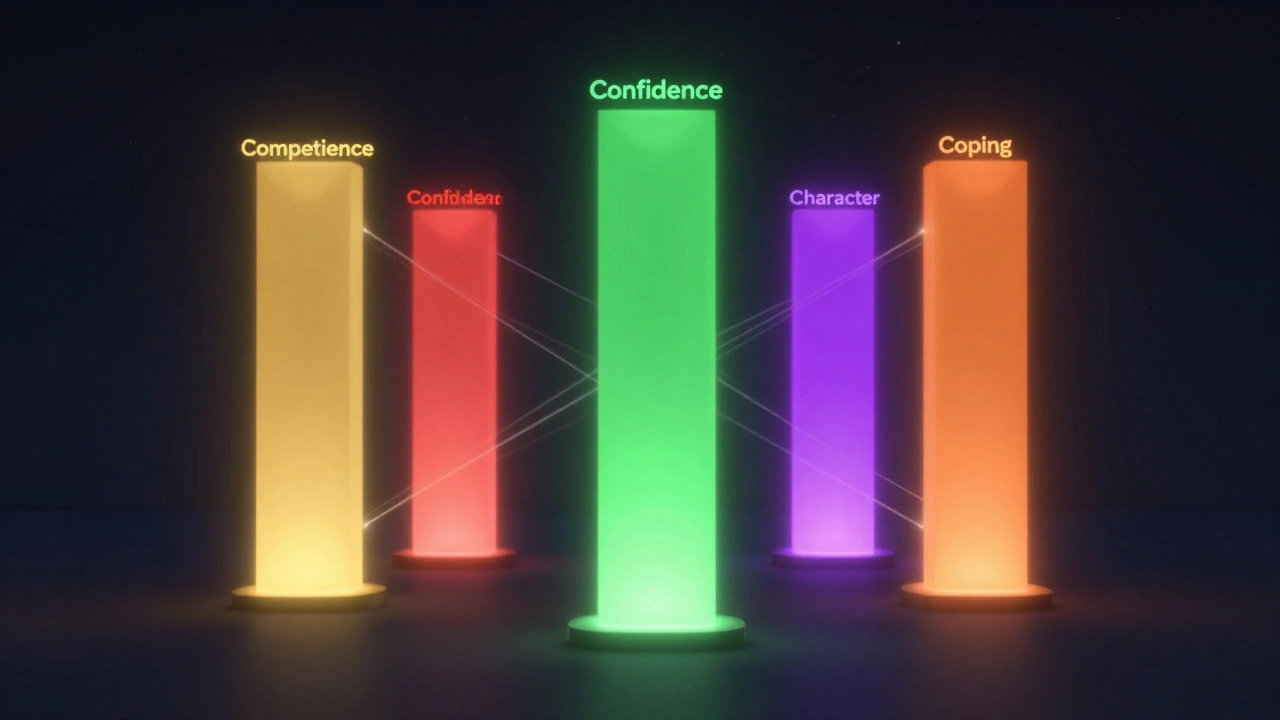
These five pillars don’t exist in isolation. They reinforce each other. For example, when you practice healthy Coping, you reduce stress, which allows you to engage more fully in Connection. Strong Connection provides support that boosts Confidence. High Confidence encourages you to take on challenges, building Competence. And living with Character gives your life meaning, which sustains you through all the other areas.
Imagine them as legs of a stool. If one leg is weak, the whole structure wobbles. By regularly checking in with each C, you can identify where you need support and take proactive steps to strengthen it.
Practical Steps to Strengthen Your 5 C's
You don’t need to overhaul your life overnight. Start with small, consistent actions.
- Weekly Check-in: Spend ten minutes each Sunday reflecting on each C. Rate yourself from 1 to 10. Which area feels weakest? Focus there next week.
- Learn Something New: Dedicate 30 minutes a day to a skill that interests you. This builds Competence.
- Schedule Social Time: Block out time for friends or family. Treat it as seriously as a work meeting. This nurtures Connection.
- Define Your Values: Write down three core values. Review them before making significant decisions. This sharpens Character.
- Create a Coping Kit: Prepare a list of activities that calm you down. Keep it accessible during stressful moments. This enhances Coping.
When to Seek Professional Help
While the 5 C's are powerful self-help tools, they are not a substitute for professional care. If you find that your mental health is significantly impacting your daily life-if you’re struggling with persistent sadness, anxiety, or trauma-it’s important to seek help from a qualified therapist or counselor.
Therapists can help you explore deeper roots of your challenges and provide tailored strategies. In Australia, services like Beyond Blue and Lifeline offer free support and resources. Don’t hesitate to reach out. Asking for help is a sign of strength, not weakness.
What are the 5 C's of mental health?
The 5 C's are Competence, Confidence, Connection, Character, and Coping. They represent key areas of psychological well-being that contribute to resilience and mental health.
How does competence differ from confidence?
Competence is about your ability to perform tasks and solve problems (skill-based). Confidence is about your belief in your worth and value (self-esteem-based). You can be competent but lack confidence, or vice versa.
Why is connection important for mental health?
Humans are social beings. Strong social connections reduce stress, increase happiness, and provide emotional support. Isolation is linked to higher rates of depression and anxiety.
Can I improve my coping skills?
Yes, coping skills are learned behaviors. You can replace unhealthy habits (like avoidance) with healthier ones (like mindfulness or exercise) through practice and sometimes with the help of therapy.
How does character influence mental well-being?
Living in alignment with your values reduces internal conflict and increases a sense of purpose. This integrity fosters self-respect and stability, which are foundational for good mental health.