Dental Implant Eligibility Checker
Think you're too old or too young for dental implants? Use this tool to evaluate key factors that dentists consider before recommending treatment. Remember, this is an estimation tool, not a medical diagnosis.
Your Profile
Enter your details and click "Check Eligibility" to see your potential candidacy status.
Important Note:
This tool provides general information based on common dental guidelines. It does not replace a professional consultation. A dentist must perform clinical exams and CBCT scans to determine bone volume and specific anatomical constraints.
Think your teeth are beyond saving because you’ve hit a certain birthday? You’re not alone in that worry. Many people assume there’s a hard cutoff for dental implants, like a retirement age for your jawbone. But here’s the truth: dentists don’t look at your birth certificate when deciding if you’re a candidate. They look at your health. The question isn’t really "at what age should you not get implants?" It’s more about whether your body can handle the surgery and heal properly.
The Myth of the Upper Age Limit
There is no official maximum age for dental implants in the UK or anywhere else. If you are 70, 80, or even 90, you might still be an excellent candidate. Why? Because age itself doesn’t stop bone from healing. What stops it are specific medical conditions that often come with getting older. Think of it this way: a healthy 75-year-old runner might have better bone density than a sedentary 45-year-old smoker. Your biological age matters far more than your chronological age.
Dentists assess three main things before saying yes: your gum health, your bone volume, and your overall systemic health. If those check out, age becomes irrelevant. In fact, skipping implants because you think you’re "too old" can lead to worse problems later, like difficulty eating or social isolation due to missing teeth.
Why Bone Density Matters More Than Years
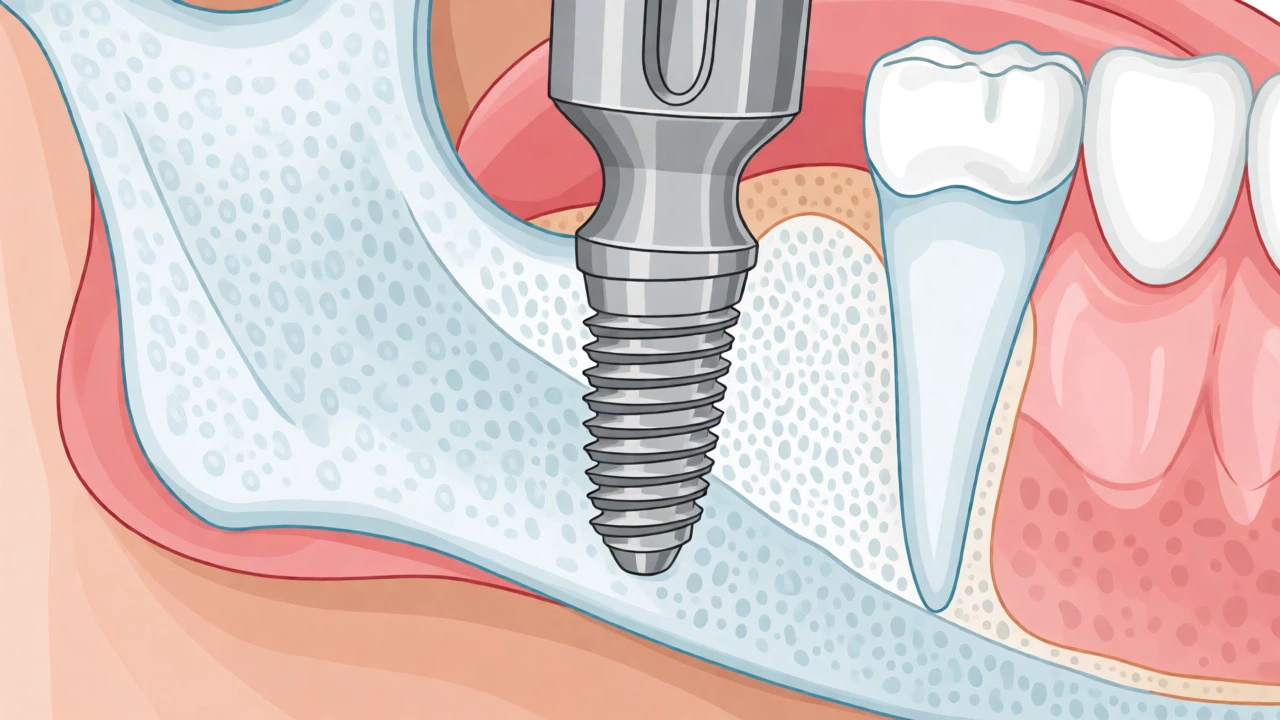
Implants work by fusing with your jawbone-a process called osseointegration. This requires solid, healthy bone. As we age, our bones naturally lose density, especially after menopause in women or due to long-term steroid use. If your jawbone has shrunk too much (a condition called alveolar ridge resorption), an implant might not have enough support to stay stable.
But don’t panic if you’ve lost some bone. Modern dentistry has solutions. Bone grafting can rebuild the foundation before placing the implant. Some clinics offer zygomatic implants for severe upper jaw bone loss, which anchor into the cheekbone instead. So, low bone density isn’t a dealbreaker; it just means your treatment plan needs a bit more prep work.
Health Conditions That Can Rule Out Implants
While age isn’t a barrier, certain health issues are red flags. These conditions affect how well your body heals or how safely you can undergo minor oral surgery.
- Uncontrolled Diabetes: High blood sugar slows healing and increases infection risk. If your HbA1c levels are stable, you’re likely fine. If they’re erratic, your dentist will want them under control first.
- Osteoporosis Medications: Drugs called bisphosphonates (often taken for brittle bones) can interfere with jawbone healing. Long-term use raises the risk of osteonecrosis, where the bone dies around the implant site. Always tell your dentist exactly what meds you take.
- Heart Disease & Blood Thinners: If you’re on anticoagulants like warfarin, bleeding during surgery is a concern. Most patients can still get implants, but you’ll need coordination between your cardiologist and dentist to manage medication pauses safely.
- Active Gum Disease: Periodontitis must be treated before implant placement. Placing a titanium post into infected gums is like building a house on quicksand-it won’t last.
Younger Patients: The Lower Age Limit
Interestingly, being too young is also a problem. Children and teenagers shouldn’t get permanent implants until their jawbone has fully stopped growing. For girls, this usually happens around age 16-18; for boys, it can take until 21. If you place an implant in a growing jaw, it acts like an artificial tooth root that doesn’t move with the rest of the teeth. Over time, it can end up looking sunken or misaligned compared to natural neighbors. Dentists often use temporary bridges or dentures for younger patients until growth plates close.
Risks Increase With Frailty, Not Just Age
Let’s be real: surgery carries risks, and these do rise slightly as we get older. But it’s not just about years lived. It’s about frailty-your physical reserve to bounce back from stress. A fit 80-year-old might recover faster than a frail 60-year-old with multiple chronic illnesses.
| Factor | Impact on Implant Success | Mitigation Strategy |
|---|---|---|
| Smoking | High failure rate (up to 2x higher) | Quit 2 weeks pre-op and 8 weeks post-op |
| Poor Oral Hygiene | Peri-implantitis (gum disease around implant) | Strict cleaning routine + professional hygiene visits |
| Immunosuppression | Slower healing, higher infection risk | Antibiotic prophylaxis if prescribed by doctor |
| Bruxism (Teeth Grinding) | Excessive force on implant screw | Night guard usage essential |
If you’re worried about anesthesia, know that most implant placements are done under local anaesthetic, similar to getting a filling. Sedation options exist for anxious patients, but general anaesthesia is rarely needed unless you’re having full-mouth reconstruction. This makes the procedure accessible even for many older adults who might struggle with major hospital surgeries.

Is It Worth It at 70+?
Absolutely. Missing teeth affect nutrition, speech, and confidence. Studies show that people with implants report significantly better quality of life than those with traditional dentures. Dentures slip, restrict food choices, and accelerate bone loss. Implants preserve your jaw structure and let you eat apples, steak, and corn on the cob without fear. For many seniors, regaining the ability to enjoy meals socially is worth the investment.
Cost is another factor. While implants are expensive upfront (often £2,000-£3,000 per tooth in the UK private sector), they last decades if cared for. Dentures need replacing every 5-10 years. Over a 20-year span, implants often prove more cost-effective and less hassle.
Next Steps: Getting Assessed
Don’t self-diagnose based on your age. Book a consultation with a specialist prosthodontist or oral surgeon. They’ll take a CBCT scan (3D X-ray) to check bone height and width. Bring a list of all medications and recent blood test results. Ask specifically about your healing capacity given your medical history. If one clinic says no, seek a second opinion-they might offer alternative techniques like short implants or angled abutments that avoid nerve channels or sinus cavities.
Can I get dental implants if I am over 80?
Yes, absolutely. There is no upper age limit for dental implants. As long as you are healthy enough to undergo minor oral surgery and have sufficient bone density (or are willing to have bone grafts), you can receive implants. Many patients in their 80s and 90s successfully maintain implants.
Does osteoporosis prevent me from getting dental implants?
Not necessarily. Osteoporosis itself doesn’t rule out implants, but the medications used to treat it (bisphosphonates) can complicate healing. Your dentist will review your medication history and may coordinate with your GP or specialist to ensure safe treatment planning.
What is the minimum age for dental implants?
The minimum age is determined by skeletal maturity, not a specific number. Typically, females wait until 16-18 years and males until 18-21 years to ensure jaw growth has ceased. Placing implants earlier can result in aesthetic mismatches as surrounding teeth continue to erupt.
Are dental implants safe for diabetics?
Yes, provided diabetes is well-controlled. Uncontrolled high blood sugar impairs wound healing and increases infection risk. Patients with stable HbA1c levels generally have success rates comparable to non-diabetics. Close monitoring and strict oral hygiene are crucial.
How long does recovery take for older adults?
Recovery varies individually. Initial soft tissue healing takes 1-2 weeks, while full osseointegration (bone fusion) takes 3-6 months. Older adults may experience slightly slower initial swelling resolution, but final integration timelines remain similar across age groups if health is managed well.