UK Healthcare Cost Estimator
Find out if you need to pay for your treatment or if it's covered by the NHS.
Select options and click Calculate to see results.
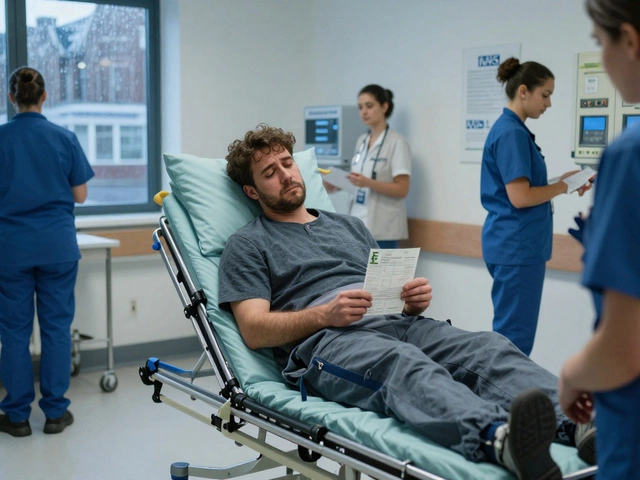
Imagine waking up in a hospital bed after an emergency, the adrenaline fading, and then that cold dread hits you: "How much is this going to cost me?" In the US, that panic is often justified. But if you are in the United Kingdom, the answer is almost always a resounding "no." The National Health Service (NHS) is a publicly funded healthcare system providing comprehensive care free at the point of use for residents. For the vast majority of treatments, surgeries, and emergency admissions, your wallet stays firmly shut.
But "almost always" is doing a lot of heavy lifting there. There are specific scenarios where you might get a bill, or where choosing a different path means paying out of pocket. Whether you are a tourist, a new resident, or just someone confused by the difference between public and private care, understanding who pays what can save you from nasty surprises. Let’s break down exactly when you pay, when you don’t, and why some people still choose to open their wallets voluntarily.
The Core Rule: Free at the Point of Use
For anyone legally resident in the UK, hospital treatment under the NHS is free. This isn’t a perk; it’s a fundamental principle established in 1948. If you break your leg skiing in Wales, have your appendix removed in London, or need chemotherapy in Manchester, you do not receive a bill for the surgery, the room, the nurses, or the doctors. The funding comes from general taxation and National Insurance contributions, meaning you’ve essentially paid for it already through your paycheck.
This applies to both planned and emergency care. Unlike many other countries where you might be charged for the ambulance ride itself, even emergency transport within the UK is generally covered for residents. The system is designed so that financial status doesn’t determine whether you get life-saving treatment. A CEO and a student with the same heart attack receive the same level of critical care without either needing to check their bank balance first.
When Do You Actually Get a Bill?
So, when does the phrase "hospital bill" actually apply in the UK context? It usually comes down to three main categories: non-residents, private choices, and specific ancillary services.
First, let’s talk about visitors. If you are a tourist from outside the European Economic Area (EEA) or a country with a reciprocal healthcare agreement, you will likely be charged for hospital treatment. Emergency care in Accident & Emergency (A&E) departments is free for everyone, regardless of nationality. However, once you are admitted as an inpatient, the clock starts ticking on costs. Hospitals will ask for proof of residency or insurance upon admission. If you cannot provide it, they may charge upfront deposits or send bills later. Rates vary by trust but can be substantial-often several hundred pounds per day for standard wards.
Second, there’s the private route. Many people assume that if they want faster service, they must pay. While you can access private hospitals directly, you can also choose to have your NHS-funded procedure done in a private facility. Here’s the catch: the NHS pays the private provider, not you. But if you decide to upgrade your experience-say, asking for a single room instead of a shared ward, or requesting a consultant of your choice rather than whoever is available-you might face extra charges. These are often called "top-up" fees, though rules around them have tightened significantly to prevent surprise billing.
| Scenario | Who Pays? | Typical Cost/Notes |
|---|---|---|
| NHS Resident (Inpatient Surgery) | Taxpayer/NHS | £0 out-of-pocket |
| A&E Visit (Any Nationality) | Taxpayer/NHS | £0 (Emergency assessment only) |
| Tourist (Non-EEA, Admitted) | Patient | ~£300-£600+ per day (varies by trust) |
| Private Patient (Self-Pay) | Patient | £5,000-£15,000+ (Procedure dependent) |
| Prescriptions (England Only) | Patient | £9.65 per item (as of 2024/25 rates) |
The Prescription Puzzle: England vs. The Rest
Here is where things get geographically confusing. While hospital stays are free across the UK, prescription charges are not uniform. If you live in Scotland, Wales, or Northern Ireland, prescriptions are free for everyone. Simple. But if you live in England, you pay a flat fee per item unless you qualify for exemptions.
As of recent updates, the standard charge in England is around £9.65 per prescription item. That sounds low until you realize it applies per item, not per visit. If your doctor writes you three separate medications, that’s nearly £30 out of pocket every month. This is technically a pharmacy cost, not a hospital bill, but patients often lump these "healthcare costs" together. Prepayment certificates (PCCs) exist to help frequent users save money, acting like a subscription model for meds. If you’re expecting major surgery and lots of follow-up meds, calculating PCC savings is worth your time.
Why Would Anyone Pay When It’s Free?
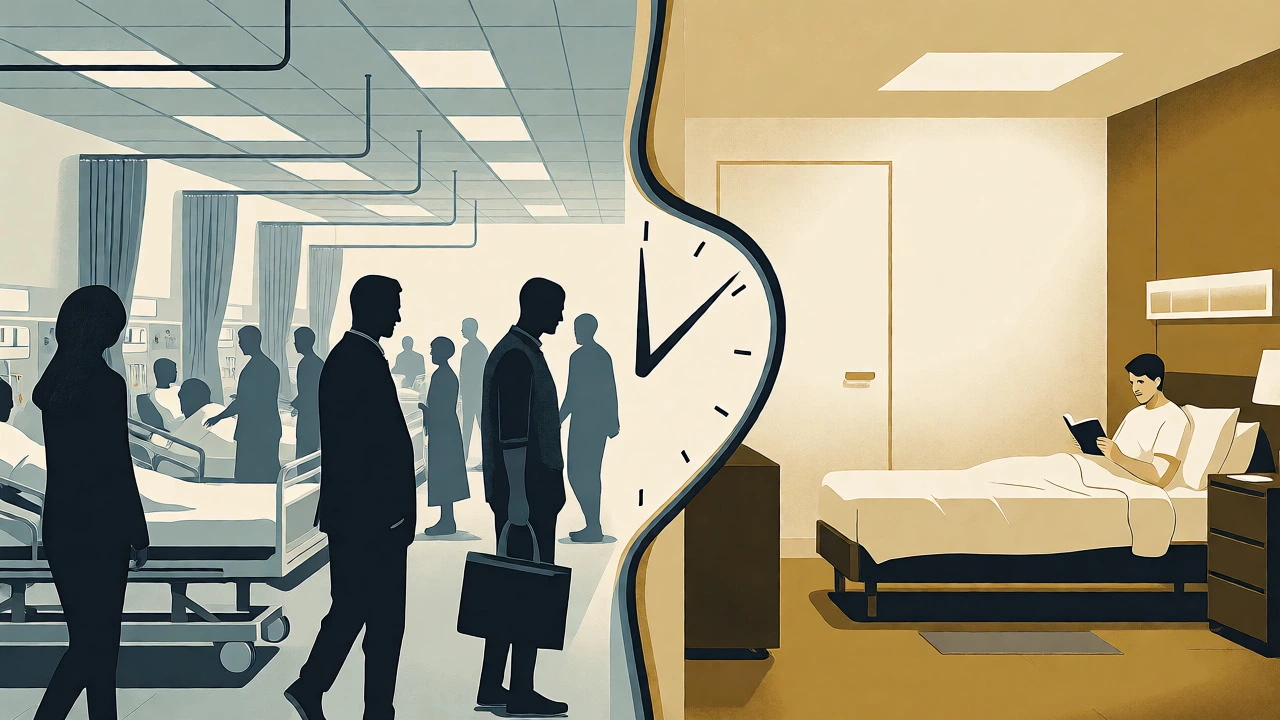
If the NHS is free, why is the Private Healthcare market booming? Because "free" often comes with a price tag measured in time. Waiting lists for elective surgeries-like hip replacements, knee operations, or cataract removals-can stretch into months or even years depending on your region and the backlog severity.
People pay for speed and comfort. A private consultation might happen next week; an NHS one might be in six months. A private hospital offers single rooms, better food, more flexible visiting hours, and the ability to choose your surgeon. For those who can afford it, or who have employer-provided health insurance, bypassing the queue is worth thousands of pounds. It’s not about better medical outcomes necessarily-the clinical quality in top NHS trusts is world-class-but about control over your own schedule and environment.
Hidden Costs: Parking, Travel, and Extras
You won’t get a bill for the surgery, but you might feel the pinch elsewhere. Hospital parking in the UK has become notoriously expensive. Some major city hospitals charge upwards of £10-£15 per day for short-stay parking, with no cap. If you’re visiting a relative daily for two weeks, that’s hundreds of pounds spent just to sit in a plastic chair. Many hospitals offer discounted rates for staff or long-term patients, but it’s rarely free.
Then there’s travel. If you’re referred to a specialist center far from home, you’re responsible for getting there. While there are reimbursement schemes for low-income patients or those traveling long distances for specialized care, they require paperwork and pre-approval. Don’t assume the taxi fare back from London to Leeds is covered automatically.
Finally, consider dental and optical care. These are largely excluded from the free-at-point-of-use model. Unless you are under 18, over 60, pregnant, or on certain benefits, you pay for NHS dental treatments and eye tests. These aren’t "hospital bills," but they are significant healthcare expenses that catch people off guard because they expect the whole system to be free.

What About Insurance?
Do you need health insurance in the UK? Strictly speaking, no. It’s not mandatory like in some countries. However, private medical insurance (PMI) acts as a safety valve for waiting times. It typically covers acute conditions, diagnostics, and elective surgeries in private facilities. It rarely covers chronic illnesses like diabetes management or mental health crises handled by the NHS, nor does it cover pre-existing conditions easily.
Think of PMI as a luxury add-on, not a replacement. If you lose your job, you don’t lose your healthcare coverage-you still have the NHS. If you cancel your policy, you revert to the public queue. This distinction is crucial for expats moving to the UK. You don’t buy insurance to access care; you buy it to access care faster.
Special Cases: Maternity and Mental Health
Maternity care is fully covered by the NHS for residents. From scans to delivery to postnatal checks, there are no bills. This includes midwife-led births and hospital deliveries. Even if you opt for a private midwife for continuity of care, the actual birth event in a hospital setting is usually free if you remain within the NHS pathway, though mixed-care models can incur fees.
Mental health support follows similar rules. Crisis intervention, inpatient psychiatric care, and community therapy sessions are free. However, accessing specific types of counseling or specialized therapies quickly might involve private providers charging £40-£80 per hour if you don’t want to wait for NHS referral slots. The NHS provides the foundation, but private options fill the gap for immediate, personalized support.
Final Thoughts: Keep Your Receipts, Not Your Fears
For most people living in the UK, the fear of a massive hospital bill is misplaced. The system works. You get sick, you go to the hospital, you get treated, you go home. No invoice arrives in the mail. The exceptions are clear: if you’re a visitor, if you’re choosing private comforts, or if you’re buying prescriptions in England.
Understanding these nuances helps you navigate the system confidently. If you’re ever unsure whether a service is covered, ask the receptionist or your GP before agreeing to treatment. They can clarify if it’s an NHS pathway or a private option requiring payment. Ultimately, the UK model prioritizes health over wealth, ensuring that a broken bone doesn’t break the bank.
Is emergency care free for tourists in the UK?
Yes, treatment in an Accident & Emergency (A&E) department is free for everyone, including tourists. However, if you are admitted to the hospital as an inpatient after the emergency assessment, you may be charged for subsequent care unless you are from a country with a reciprocal healthcare agreement.
Do I have to pay for ambulance services?
For UK residents, emergency ambulance services are free. There is no charge for being transported to the hospital. Non-residents may be charged for ambulance services depending on their country of origin and whether they have travel insurance covering medical repatriation.
Are dental visits free in the UK?
No, dental care is not free for most adults. In England, you pay set bands for NHS dental treatment (currently ranging from roughly £24 to £280 depending on complexity). Children under 18, pregnant women, and those on certain benefits are exempt. Scotland, Wales, and Northern Ireland have different subsidy structures but generally still charge for adult dental work.
What happens if I can't pay my hospital bill as a foreigner?
Hospitals will typically request payment before discharge or require a deposit. If you leave without paying, the debt remains against you. For EU citizens, the EHIC/GHIC card covers necessary state-provided healthcare. For others, unpaid bills can lead to difficulties with future visa applications or entry into the UK, as outstanding debts to the NHS are recorded.
Does private insurance replace the NHS?
No, private insurance complements the NHS. It allows you to skip waiting lists for elective procedures and choose private facilities. However, it does not replace the NHS for emergencies, primary care (GPs), or ongoing chronic condition management, which are best handled through the public system.