

Surgery Financing Calculator & Comparison Tool
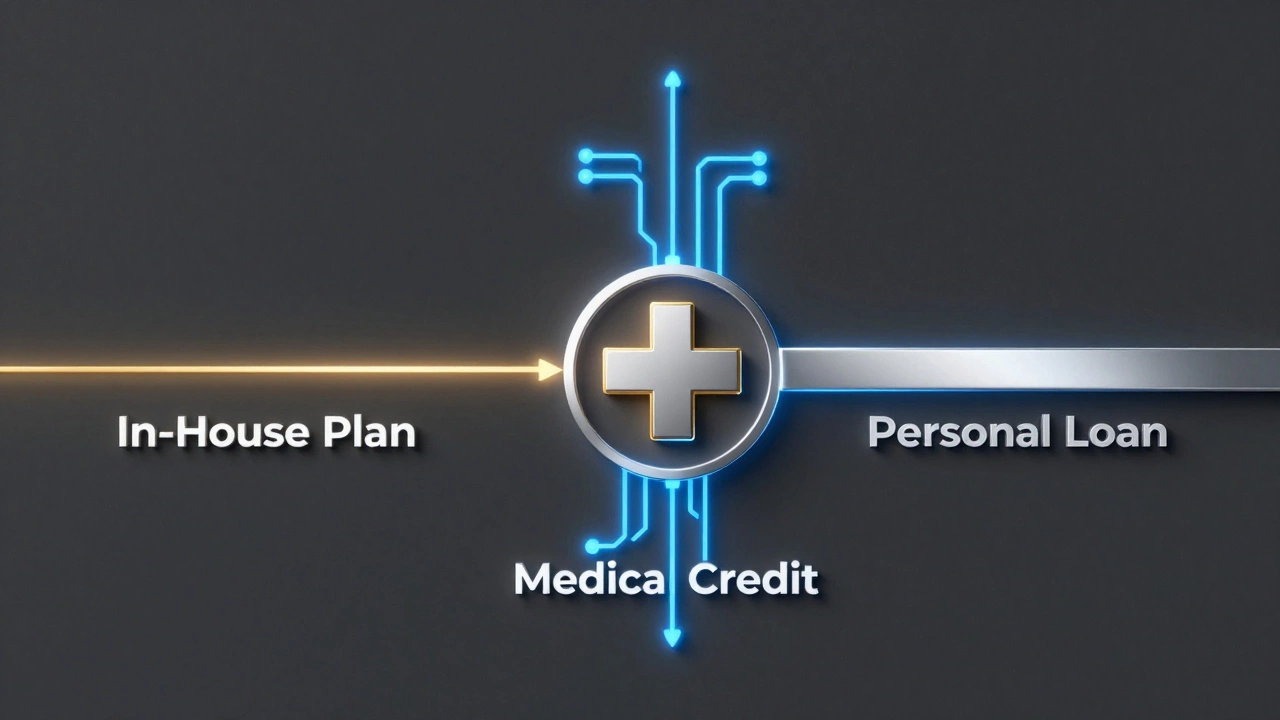
In-House Plan
Lowest CostAssuming 0% Interest
Total Paid: $0
Note: Usually only available for shorter terms (3-6 mo).
Medical Credit
High RiskBased on entered APR
Total Paid: $0
Warning: Deferred interest may apply if not paid in full by deadline.
Personal Loan
StableFixed Market Rate
Total Paid: $0
Generally more flexible terms and predictable payments.
Staring at a surgical quote that looks like a phone number is a gut-punch. You know you need the procedure to get your quality of life back-maybe it's a hip replacement so you can walk without pain, or a corrective surgery that's been on your list for years-but the bank account isn't cooperating. The short answer is yes, you can often get surgery and pay for it over time, but how you do it changes everything from your monthly budget to the total cost of the operation.
Key Takeaways
- Most private clinics offer some form of payment plan or third-party financing.
- Interest rates vary wildly between internal clinic plans and external medical loans.
- Credit scores play a massive role in which "pay later" options are available to you.
- Hidden fees in medical credit can make a "cheap" monthly payment very expensive in the long run.
How Private Surgical Financing Actually Works
When you walk into a private clinic, you aren't just dealing with doctors; you're dealing with a business. Because private surgery cost is the total expense of a medical procedure performed in a non-government facility, including surgeon fees, anesthesia, and hospital stay can be staggering, clinics have developed ways to bridge the gap between the cost and your current cash flow.
Usually, this happens in one of two ways. Either the clinic has an in-house arrangement where they let you pay in installments, or they partner with a specialized medical finance company. The latter is more common because it shifts the risk away from the doctor. They get paid upfront by the lender, and you owe the lender instead of the surgeon. It's a win-win for the provider, but for you, it means you're essentially taking out a loan.
The Different "Pay Later" Paths
Not all payment plans are created equal. Depending on the urgency of your surgery and your financial health, you'll likely encounter these three main routes:
1. In-House Payment Plans: Some clinics allow you to pay a deposit and then split the remainder over 3 to 6 months. These are often interest-free because the clinic is just trying to make the procedure accessible. However, they are rare for high-cost surgeries like cardiac or complex orthopedic work because the clinic can't afford to carry that much debt.
2. Medical Credit Loans: This is where companies like CareCredit (common in the US) or similar medical finance providers in the UK and Australia come in. These are specialized lines of credit. They often offer a "promotional period"-say, 6 or 12 months of 0% interest. If you pay it off in that window, it's a great deal. If you miss it by one day, the interest often retroactively applies to the whole balance at a very high rate.
3. Personal Loans: If you have a decent relationship with your bank, a standard unsecured personal loan might actually be cheaper than medical-specific credit. You get a lump sum, pay the clinic in full, and then pay the bank back over 2 to 5 years at a fixed rate.
| Option | Interest Rate | Approval Speed | Risk Level |
|---|---|---|---|
| In-House Plan | Usually 0% | Fast | Low |
| Medical Credit | 0% to 29.99% | Instant/Same Day | High (if deferred) |
| Personal Loan | Fixed (Market Rate) | Moderate | Moderate |
The Hidden Traps of "Zero Interest"
Be very careful with the phrase "zero percent interest." In the world of Medical Financing, this is often a "deferred interest" plan. Here is a real-world scenario: you get a $5,000 surgery with a 12-month 0% offer. You pay $400 a month for 11 months, but in the 12th month, you're short by $100. Because you didn't pay the balance in full by the deadline, the lender charges you interest on the original $5,000 starting from the day of the surgery. Suddenly, your "free" loan costs you hundreds of dollars in back-interest.
Always ask the finance coordinator for the "Truth in Lending" statement. This document breaks down exactly what happens if you miss a payment and whether there are origination fees. Some lenders charge a 1% to 5% fee just for setting up the loan, which is essentially interest by another name.
Evaluating Your Eligibility
Can anyone get a "pay later" plan? Not exactly. Most of these options are credit-based. If you have a high credit score, you'll get the lowest rates and the longest repayment terms. If your credit is poor, you might find yourself in a tough spot. Some clinics might ask for a co-signer-someone with better credit who agrees to pay if you can't.
If you can't qualify for traditional financing, you might look into Medical Grants or non-profit organizations that help with specific conditions. While rare for elective procedures, they are more common for life-altering surgeries. Another option is negotiating a "cash discount." Some clinics actually lower the price if you can pay a larger chunk upfront because it saves them from paying the 3-5% fee they owe to the finance company.
Steps to Secure Surgery Financing
- Get a Detailed Quote: Don't just ask for the surgery price. Ask for the "global fee," which includes the surgeon, the anesthetist, the facility fee, and any post-op medications.
- Check Your Own Credit: Know your score before the clinic runs a "hard pull" on your credit report, which can temporarily dip your score.
- Compare Three Options: Look at the clinic's internal plan, a specialized medical lender, and your own bank.
- Read the Fine Print: Look specifically for "deferred interest" clauses and "prepayment penalties" (fees for paying the loan off early).
- Set Up Auto-Pay: With medical credit, one missed payment can trigger the end of a 0% period. Automation is your best defense.

Is It Actually Worth It?
Financing surgery is a trade-off between immediate health and long-term financial stress. If the surgery is to fix a problem that is actively preventing you from working or causing severe pain, the ROI (return on investment) is high. Paying a bit of interest to get back to work is a logical move.
However, for purely elective or cosmetic procedures, the math changes. Taking on high-interest debt for something that isn't medically necessary can lead to a debt spiral. If the monthly payment takes up more than 15% of your take-home pay, it's usually a sign that the plan is too aggressive.
Frequently Asked Questions
Will the clinic let me start surgery before the loan is approved?
Almost never. Clinics require a "guarantee of payment." This means they need the loan approval in writing or a significant deposit before they will put you on the surgical schedule. Scheduling usually happens after the financial contract is signed.
What happens if I can't keep up with the payments?
If it's a third-party loan, the clinic is already paid, so they won't be the ones chasing you. The lender will report the missed payments to credit bureaus, which will tank your credit score. If it's an in-house plan, the clinic may send your account to a collections agency.
Can I use my health insurance to pay off a "pay later" loan?
Generally, no. Insurance pays the provider directly. If you've already taken out a loan to pay the provider, the insurance reimbursement would typically go to the clinic, who might then refund you, allowing you to pay down the loan. You must coordinate this with the clinic's billing department first.
Are there any taxes involved in medical loans?
The loan itself isn't taxable, but in some regions, the interest paid on medical loans may be tax-deductible if your total medical expenses exceed a certain percentage of your adjusted gross income. Check with a tax professional in your specific area.
Does "pay later" only apply to the surgeon's fee?
It depends on the bundle. Sometimes the loan covers the "hospital package" (room and nursing) but the surgeon requires a separate payment. Always clarify if the financing covers the entire "surgical episode" or just a portion of it.
Next Steps for Patients
If you're currently weighing your options, start by requesting a detailed itemized quote. This prevents "sticker shock" later when you find out the anesthesia wasn't included in the original estimate. Once you have the number, spend a weekend comparing a personal loan from your bank against the clinic's offered finance partner. If the numbers don't add up, don't be afraid to ask the clinic for a payment plan based on your specific budget-sometimes they are more flexible than they first appear if you have a consistent history of employment.