Dental Treatment Cost Comparison Calculator
Compare Your Options
See estimated costs and long-term value for different dental treatments based on your needs.
Your Treatment Options
Thinking about dental implants in the UK but worried about the cost? You’re not alone. A single dental implant can easily set you back £2,500 to £3,500, and if you need multiple teeth replaced, the price can climb past £15,000. That’s more than a used car. But what if you don’t need to go all-in on implants? There are real, reliable, and significantly cheaper options that still give you function, confidence, and long-term value.
Dental Bridges: The Middle Ground
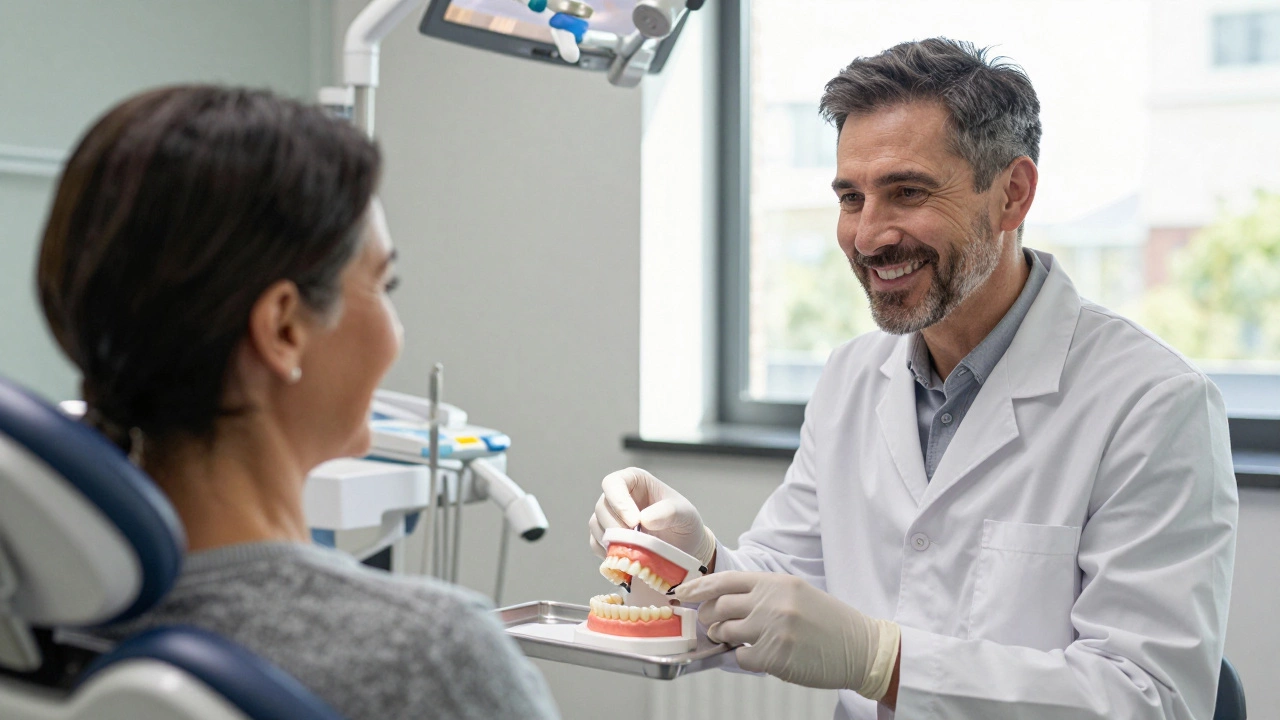
A dental bridge is often the first alternative people consider. It’s a fixed solution-meaning it doesn’t come out like dentures-and it replaces one or more missing teeth by anchoring to the natural teeth on either side. The process is less invasive than implants because it doesn’t require drilling into your jawbone. Instead, your dentist files down the adjacent teeth slightly to fit crowns that hold the false tooth (or teeth) in place.
Cost-wise, a traditional bridge in the UK usually runs between £500 and £1,200 per tooth. That’s roughly a third of the price of an implant. It’s also faster: you can get it done in just two visits over a couple of weeks. But there’s a catch. Because it relies on healthy neighboring teeth, those teeth will always need crowns, even if they’re perfectly fine now. Over time, this can weaken them. If one of the supporting teeth develops decay or damage later, the whole bridge may need replacing.
Still, for people who want something permanent without surgery, a bridge makes sense. It’s stable, looks natural, and doesn’t require daily removal. Many NHS patients get bridges when implants aren’t covered. Private clinics often recommend them as a cost-effective stopgap before considering implants down the line.
Dentures: Affordable and Flexible
If you’re missing several teeth-or an entire arch-dentures are the most budget-friendly option. Complete upper or lower dentures can cost as little as £300 to £800 on the NHS, and private full sets range from £800 to £2,500. Partial dentures, which replace just a few teeth, start around £200.
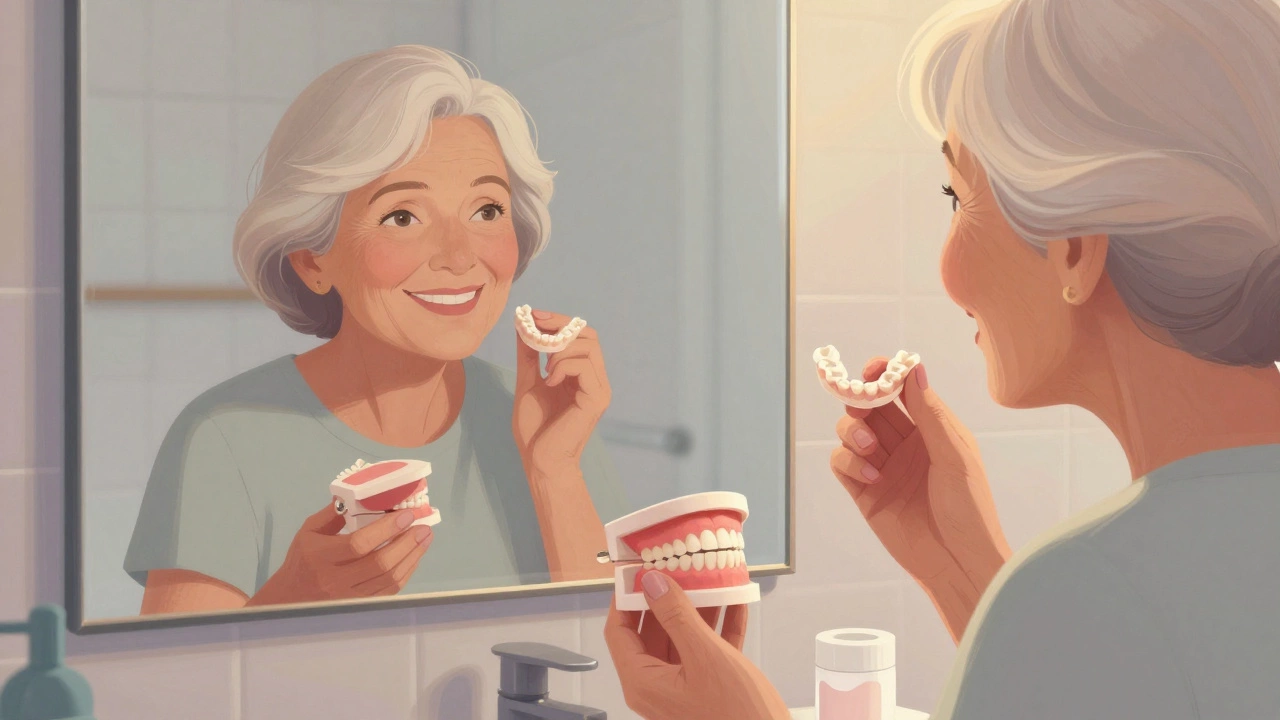
Modern dentures aren’t the clunky, ill-fitting ones from decades ago. They’re made with lightweight acrylic and flexible materials that fit snugly. Many come with soft liners for comfort, and some are designed with precision attachments that snap onto remaining natural teeth or mini-implants for extra stability.
But they’re not perfect. Dentures need daily cleaning and removal. Some people find them awkward at first, especially when eating crunchy foods or speaking clearly. You might need relines every few years as your gums change shape. And if you lose bone under the denture over time, they can become loose and uncomfortable.
Still, for many, especially older adults or those on a tight budget, dentures are the only realistic choice. They restore chewing ability and prevent facial sagging. And with proper care, they can last 5 to 10 years.
Mini Dental Implants: Smaller, Cheaper, Still Effective
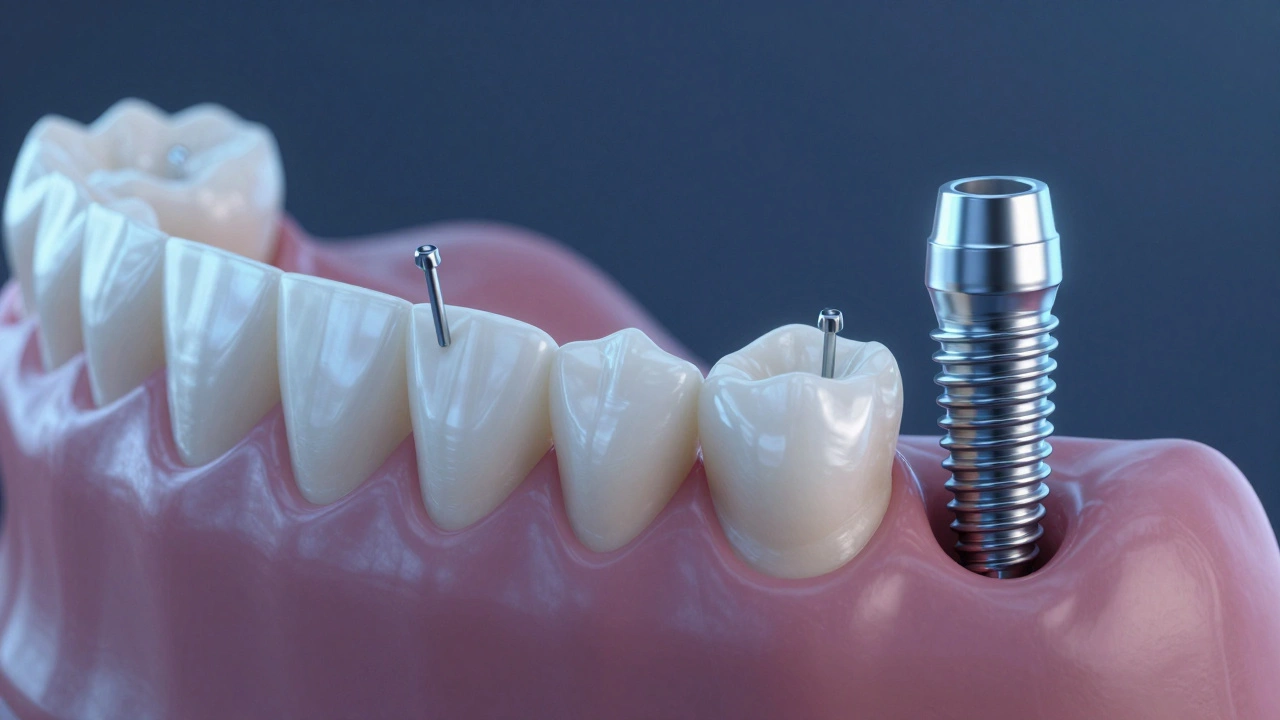
Here’s something most people don’t know: there’s a scaled-down version of dental implants called mini dental implants (MDIs). These are thinner, usually 1.8mm to 3mm wide, compared to standard implants at 3.5mm to 5mm. They’re designed for patients with less jawbone density or those who can’t afford full-size implants.
MDIs cost between £500 and £1,500 per tooth-often half the price of regular implants. They’re placed with minimal surgery, sometimes in under an hour. Many are used to stabilize lower dentures, which tend to slip more than upper ones. In fact, thousands of UK patients use MDIs to lock their dentures in place without needing a full implant set.
They’re not ideal for every situation. MDIs aren’t meant to support crowns on back molars where heavy chewing forces occur. They’re best for front teeth or as anchors for dentures. But for someone who wants a secure, long-term solution without the full cost, they’re a smart middle ground.
Adhesive Dentures and Temporary Solutions
If you’re looking for something even cheaper-maybe you’re waiting for savings to build up or you need a quick fix-adhesive dentures are an option. These are over-the-counter partial dentures you can buy online or at pharmacies. They use a strong dental adhesive to stick to your gums and remaining teeth.
They cost as little as £50 to £150. But here’s the truth: they’re temporary. They’re not custom-made, so they don’t fit perfectly. That means they can irritate your gums, trap food, and wear down your natural teeth over time. Some people use them for a few months while saving up for something better. Others rely on them long-term because they can’t afford anything else.
Don’t treat them as a permanent fix. But if you need to eat properly, smile confidently, or get through a job interview next week, they can help. Just plan to upgrade later.
What About the NHS?
If you’re eligible for NHS dental care, your options are limited but affordable. Under Band 3 treatment, you can get bridges, dentures, or even implants if your case is deemed clinically necessary. The cost is £319.10 (as of 2026). That’s a huge saving compared to private prices.
But here’s the catch: implants on the NHS are rare. They’re only offered if you’ve lost teeth due to accident, disease, or congenital conditions-not just for cosmetic reasons. Most people get dentures or bridges instead. If your dentist says you’re not eligible for an implant on the NHS, it doesn’t mean you don’t need one. It just means the system prioritizes function over aesthetics.
Many patients use the NHS for basic care and then go private for upgrades later. For example, get a denture on the NHS now, then add mini-implants privately in two years to hold it better. That’s a common and smart path.
How to Decide What’s Right for You
Choosing the right alternative isn’t just about price. It’s about your lifestyle, oral health, and long-term goals.
- If you want something fixed and don’t mind altering healthy teeth → dental bridge
- If you’re missing multiple teeth and need the lowest upfront cost → dentures
- If you have dentures that slip and want better stability without full implants → mini dental implants
- If you need a quick, temporary fix while saving → adhesive dentures
- If you’re eligible for NHS care → ask about Band 3 treatment
Don’t rush. Get a second opinion. Many private clinics offer free consultations where they’ll show you all your options with price breakdowns. Ask to see before-and-after photos of real patients-not just marketing images. And always ask: “What happens if this fails in 5 years?” That’s the real test of any dental solution.
Long-Term Value Matters More Than Upfront Cost
It’s tempting to pick the cheapest option. But think about what happens down the road. A £300 denture might need replacing every 5 years. That’s £600 over 10 years. A £1,200 bridge might last 10 to 15 years. A mini-implant could last 15+ years with good care. A full implant can last 25 years or more.
So while dentures are cheaper now, they might cost you more over time. And if your jawbone shrinks because you’re missing teeth for too long, your options get even more limited-and more expensive later.
That’s why many dentists suggest a hybrid approach: start with something affordable now, but plan for a more permanent upgrade. Use your savings wisely. Don’t let cost stop you from restoring your smile-but don’t let short-term thinking trap you in a cycle of replacements.
What You Can Do Today
- Book a free consultation with a private dentist to compare options side by side
- Ask your NHS dentist if you qualify for Band 3 treatment
- Check if your private dental insurance covers bridges or dentures
- Look for payment plans-many clinics offer 0% interest over 12 to 24 months
- Don’t delay. The longer you wait, the more bone you lose, and the fewer options you’ll have
Your teeth aren’t just about eating. They’re about speaking clearly, smiling without hiding, and feeling like yourself again. You don’t need a £3,000 implant to get there. But you do need to act before your choices disappear.
Are dental bridges cheaper than implants in the UK?
Yes, dental bridges are significantly cheaper. A single bridge costs between £500 and £1,200, while a single dental implant typically costs £2,500 to £3,500. Bridges don’t require surgery or bone grafting, which cuts the cost and recovery time. But they rely on healthy adjacent teeth, which must be filed down to support the bridge.
Can I get dental implants on the NHS?
Dental implants are rarely available on the NHS. They’re only offered if you have a clinical need-such as losing teeth from trauma, cancer treatment, or severe congenital conditions. Cosmetic reasons like missing teeth due to decay usually don’t qualify. Most NHS patients receive dentures or bridges under Band 3 treatment for £319.10.
What’s the cheapest way to replace missing teeth in the UK?
The cheapest option is adhesive dentures, which cost as little as £50 to £150. These are over-the-counter, non-custom solutions that stick to your gums. For a more reliable, custom-made option, partial or full dentures on the NHS cost £319.10 under Band 3. Private dentures start around £800.
Do mini dental implants work as well as regular ones?
Mini dental implants work well for stabilizing dentures and replacing front teeth, but they’re not designed for heavy chewing like molars. They cost half as much as regular implants and require less invasive surgery. However, they have a shorter track record for long-term durability. Many UK patients use them as a bridge between dentures and full implants.
How long do dental bridges last compared to implants?
Dental bridges typically last 10 to 15 years with good oral hygiene. Implants can last 25 years or more because they integrate with the jawbone. But bridges are easier to replace if they fail. Implants, if they fail, often require bone grafting and more complex surgery. The choice depends on whether you prioritize longevity or ease of repair.