Mental Health Trigger Assessment Tool
How to Use This Tool
Answer these simple questions to identify which mental health triggers might be affecting you. This tool is based on the latest research and is not a diagnostic tool. Results are for informational purposes only.
Everyone has bad days. But when low mood, anxiety, or numbness stick around for weeks or months, it’s not just stress-it’s your mental health slipping. And sometimes, the things making it worse aren’t obvious. You might think you’re handling things fine, while quietly draining yourself with habits that feel harmless. The truth is, mental health doesn’t collapse overnight. It erodes-slowly, quietly-often because of daily choices we don’t even notice.
Chronic Stress Without Relief
Stress isn’t the enemy. A little pressure can push you to perform. But when stress never turns off, your brain and body pay the price. Think about someone working 60-hour weeks, checking emails at midnight, skipping meals, and never taking a real day off. Their cortisol stays high. Their sleep gets shattered. Their nervous system stays stuck in fight-or-flight mode. Over time, this rewires the brain to expect danger-even when there’s none. Studies show people with unrelenting work stress are 2.5 times more likely to develop depression than those with balanced schedules. It’s not laziness. It’s biology.
Social Isolation and Loneliness
Humans aren’t meant to go it alone. Even introverts need connection. But loneliness isn’t just about being physically alone. You can be in a crowded room and still feel utterly disconnected. When you stop sharing how you really feel-because you’re afraid of judgment, or you’ve convinced yourself no one cares-you start to believe you’re broken. Social isolation doesn’t just hurt emotionally. It raises inflammation in the body, disrupts sleep, and weakens the immune system. People who report feeling lonely are 50% more likely to develop anxiety disorders. And it’s not just older adults. Young people scrolling through perfect lives on social media often feel more alone than ever.
Substance Use as a Coping Tool
Alcohol, cannabis, prescription pills, even too much caffeine-these aren’t just party tricks or weekend relaxers. When used regularly to numb emotions, they become quick fixes that make the underlying problem worse. Alcohol is a depressant. It might help you fall asleep, but it ruins deep REM sleep, leaving you exhausted and emotionally raw the next day. Using drugs to escape anxiety doesn’t solve anxiety-it trains your brain to rely on chemicals instead of coping skills. In Australia, over 1 in 5 adults who use alcohol to manage stress meet the clinical criteria for a substance use disorder. The cycle is cruel: you feel worse, so you use more, so you feel even worse.
Sleep Deprivation and Poor Sleep Hygiene
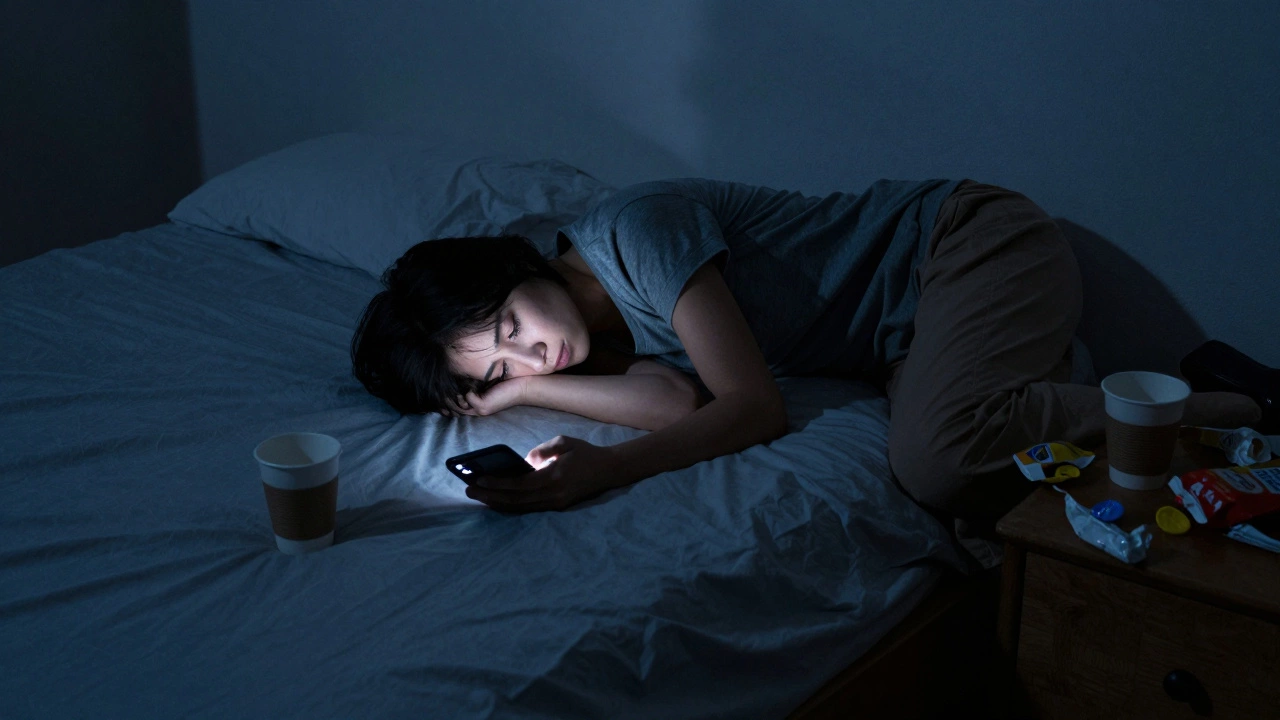
Sleep isn’t downtime. It’s repair time. When you regularly get less than 6 hours, your brain can’t process emotions properly. You become more reactive, more irritable, more prone to panic. The prefrontal cortex-the part that helps you think clearly and control impulses-shuts down. Meanwhile, the amygdala, your fear center, goes into overdrive. This isn’t just about feeling tired. Chronic sleep loss increases the risk of depression by 40%. And it’s not just about how long you sleep. Scrolling in bed, drinking coffee after 3 p.m., or having an inconsistent wake-up time-even on weekends-tricks your body’s internal clock. Your brain starts associating your bed with stress, not rest.

Unhealthy Diet and Nutritional Gaps
Your gut and your brain are wired together. A diet full of processed foods, sugar, and refined carbs doesn’t just pack on weight-it messes with your mood. Low levels of omega-3 fatty acids, vitamin D, magnesium, and B vitamins are strongly linked to higher rates of depression and anxiety. People who eat mostly fast food, sugary snacks, and diet sodas are 30% more likely to report moderate to severe depression than those who eat whole foods like vegetables, fish, nuts, and legumes. It’s not about being perfect. It’s about consistency. Skipping meals, drinking too much soda, or relying on energy bars instead of real food adds up. Your brain needs fuel-and not the kind that gives you a crash an hour later.
Constant Comparison and Social Media Overload
Scrolling through curated feeds isn’t harmless entertainment. It’s a daily dose of social pressure. Seeing others’ highlight reels makes your own life feel inadequate. You start measuring your worth by likes, comments, and follower counts. The brain doesn’t distinguish between real rejection and a post going unnoticed. Research from the University of Sydney found that people who spend more than 3 hours a day on social media are twice as likely to report symptoms of anxiety and depression. It’s not the apps themselves-it’s what they replace: face-to-face conversations, physical activity, quiet time. When you trade real connection for digital validation, you lose something irreplaceable.
Ignoring Physical Health Problems
Chronic pain, thyroid issues, diabetes, heart disease-these aren’t just “body problems.” They directly impact your mind. Inflammation from untreated conditions floods the brain with chemicals that trigger low mood. Medications for physical illnesses can have side effects like fatigue, brain fog, or emotional blunting. And when you’re constantly managing pain or illness, there’s little energy left for joy, creativity, or connection. Many people don’t realize their depression is tied to an undiagnosed thyroid condition or sleep apnea. Mental health doesn’t live in a vacuum. It’s connected to every system in your body.

Financial Stress and Uncertainty
Money isn’t just about bills. It’s about safety, dignity, and control. When you’re constantly worried about rent, medical bills, or job loss, your brain stays on high alert. This isn’t just stress-it’s trauma. People living paycheck to paycheck are three times more likely to experience anxiety disorders. Even those with stable incomes feel the pressure when inflation rises or savings shrink. The shame around financial struggle often keeps people from asking for help. They isolate, hide their struggles, and spiral. Financial stress doesn’t care if you’re employed or educated. It only cares if you feel powerless.
Unresolved Trauma and Suppressed Emotions
Some wounds don’t heal because they’re never named. Childhood neglect, abuse, loss, or a major betrayal can stay hidden for years-buried under busyness, humor, or overachieving. But trauma doesn’t disappear. It hides in your body: tight shoulders, stomach pain, panic attacks, or sudden rage. Suppressing emotions doesn’t make them go away. It makes them louder. People who avoid talking about painful experiences are far more likely to develop PTSD, depression, or substance use disorders later in life. Healing doesn’t mean forgetting. It means facing what was too hard to handle before-with support.
Not Seeking Help or Feeling Stuck
One of the biggest worseners of mental health is believing you have to fix it alone. Many people wait years before reaching out-not because they don’t care, but because they feel ashamed, afraid, or hopeless. They think therapy is for “crazy” people. Or they’ve tried once and didn’t feel better, so they gave up. But mental health care isn’t a one-size-fits-all fix. Finding the right therapist, the right medication, the right support group can take time. It’s not failure if it doesn’t work the first time. It’s part of the process. The worst thing you can do is stay silent.
What Can You Do Instead?
It’s not about fixing everything at once. Small, consistent changes matter more than grand gestures. Start with one thing:
- Swap one sugary snack for a handful of nuts or fruit each day.
- Turn off screens 30 minutes before bed-no phone, no laptop.
- Text one person you trust just to say, “I’m not okay today.”
- Schedule a 10-minute walk outside, no headphones.
- Write down one thing you’re grateful for, even if it’s tiny.
These aren’t magic fixes. But they’re signals to your brain that you’re worth caring for. And that’s the first step back to feeling like yourself again.
Can mental health get worse without me realizing it?
Yes. Mental health decline is often subtle. You might not feel “depressed” in the dramatic sense-you might just feel tired, irritable, or numb. You stop enjoying things you used to love. You withdraw from friends. You snap at loved ones. These are warning signs, not personality changes. The brain adapts to stress by shutting down emotions, which makes it harder to notice you’re struggling.
Is it my fault if my mental health is getting worse?
No. Mental health struggles are not a personal failure. They’re the result of complex interactions between biology, environment, life events, and genetics. Blaming yourself only adds shame, which makes things worse. You wouldn’t blame someone for getting diabetes because they ate sugar. Mental health is the same-it’s not about willpower. It’s about systems in your body and mind that need support.
How long does it take to recover from mental health deterioration?
There’s no set timeline. Some people feel better in weeks with the right support. Others take months or even years. Recovery isn’t linear. There will be good days and bad days. What matters is progress, not perfection. Small steps-like sleeping better, talking to someone, or moving your body-add up over time. Patience and consistency are more powerful than quick fixes.
Can exercise really help with mental health?
Yes. Regular physical activity-like walking, dancing, or cycling-boosts serotonin and endorphins, reduces cortisol, and improves sleep. Studies show exercise can be as effective as medication for mild to moderate depression. You don’t need to run a marathon. Just 20-30 minutes of movement most days makes a difference. Movement tells your brain you’re safe and capable.
When should I seek professional help?
If you’ve felt low, anxious, or disconnected for more than two weeks-and it’s affecting your work, relationships, or daily tasks-it’s time to reach out. You don’t need to be in crisis. Early support prevents things from getting worse. Talk to your GP, a psychologist, or a mental health hotline. In Australia, services like Beyond Blue and Lifeline offer free, confidential support 24/7.