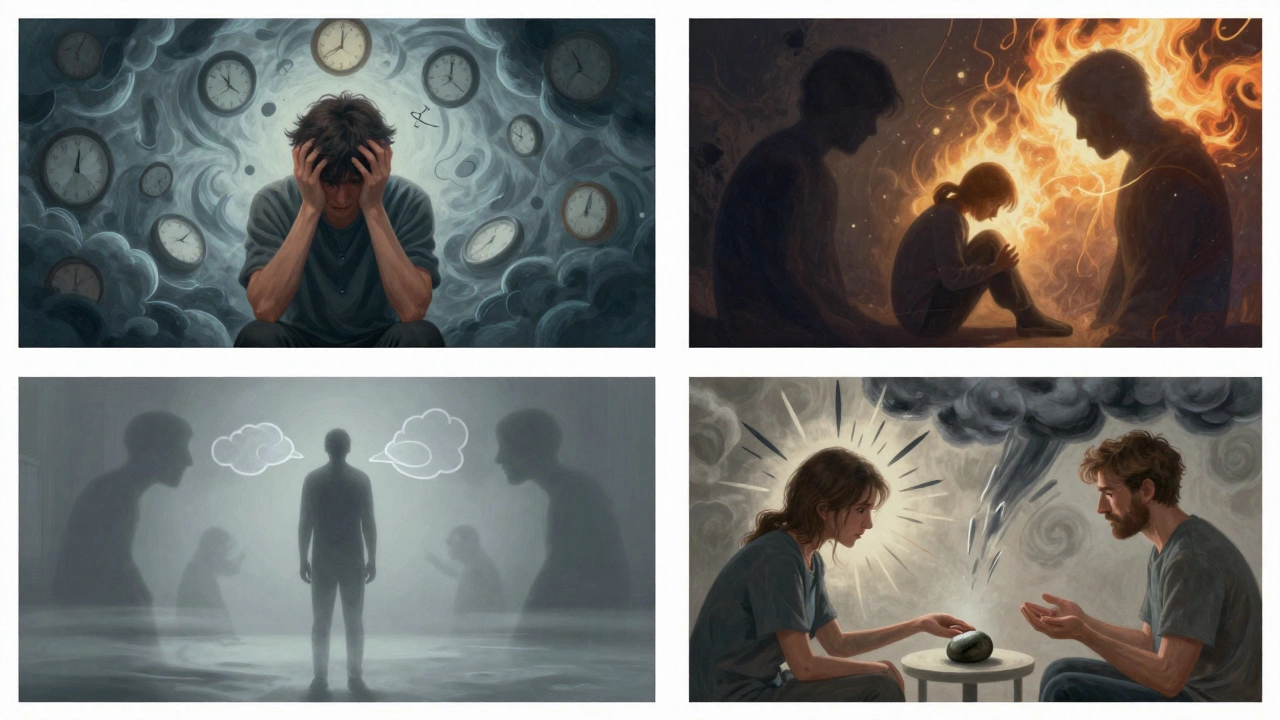
When people talk about mental health, they often think of feeling sad or stressed. But mental health isn’t just about being happy or unhappy. It’s about how your mind functions, how you handle stress, and how you relate to others. And when something goes off track, it usually falls into one of four broad types of mental health conditions. These aren’t just labels-they’re real, measurable patterns that doctors and therapists use to understand what’s happening inside someone’s brain and behavior.
Anxiety Disorders
Anxiety isn’t just being nervous before a job interview. When it becomes constant, overwhelming, and starts controlling your life, it’s a clinical anxiety disorder. This is the most common type of mental health condition. About 1 in 5 adults worldwide will experience an anxiety disorder at some point in their life, according to the World Health Organization.
There are several kinds: panic disorder, where you suddenly feel like you’re having a heart attack; social anxiety, where just being around people triggers intense fear; and generalized anxiety, where you’re always worrying about everything-money, health, your kids, even if there’s no real reason. Then there’s OCD, where intrusive thoughts lead to repetitive behaviors, like checking locks 10 times or washing hands until they bleed.
What makes anxiety disorders different from normal stress? It’s the persistence. Normal worry fades. Clinical anxiety sticks around for months, interferes with work or relationships, and doesn’t respond to logic. You can’t just "snap out of it." Treatment usually involves therapy-especially CBT-and sometimes medication like SSRIs. Many people recover fully with the right support.
Mood Disorders
Mood disorders are about how you feel on the inside, day after day. The two big ones are depression and bipolar disorder. Depression isn’t just feeling down. It’s a heavy, unshakable sadness that lasts for weeks or months. You lose interest in things you used to love. You sleep too much or can’t sleep at all. You might feel worthless, or even think about ending your life. The WHO says over 280 million people globally live with depression.
Bipolar disorder is different. It’s not just depression. It’s depression and mania. Mania means feeling so energized, so confident, so invincible that you make reckless decisions-spending thousands of dollars, going days without sleep, taking dangerous risks. Then the crash hits. The swing between these two extremes is what defines bipolar disorder. It’s often misdiagnosed as just depression, which is dangerous because treating it with antidepressants alone can trigger mania.
Both conditions respond well to mood stabilizers, therapy, and lifestyle changes. Regular sleep, exercise, and avoiding alcohol make a huge difference. But they need to be taken seriously. Left untreated, mood disorders can destroy careers, relationships, and lives.
Psychotic Disorders
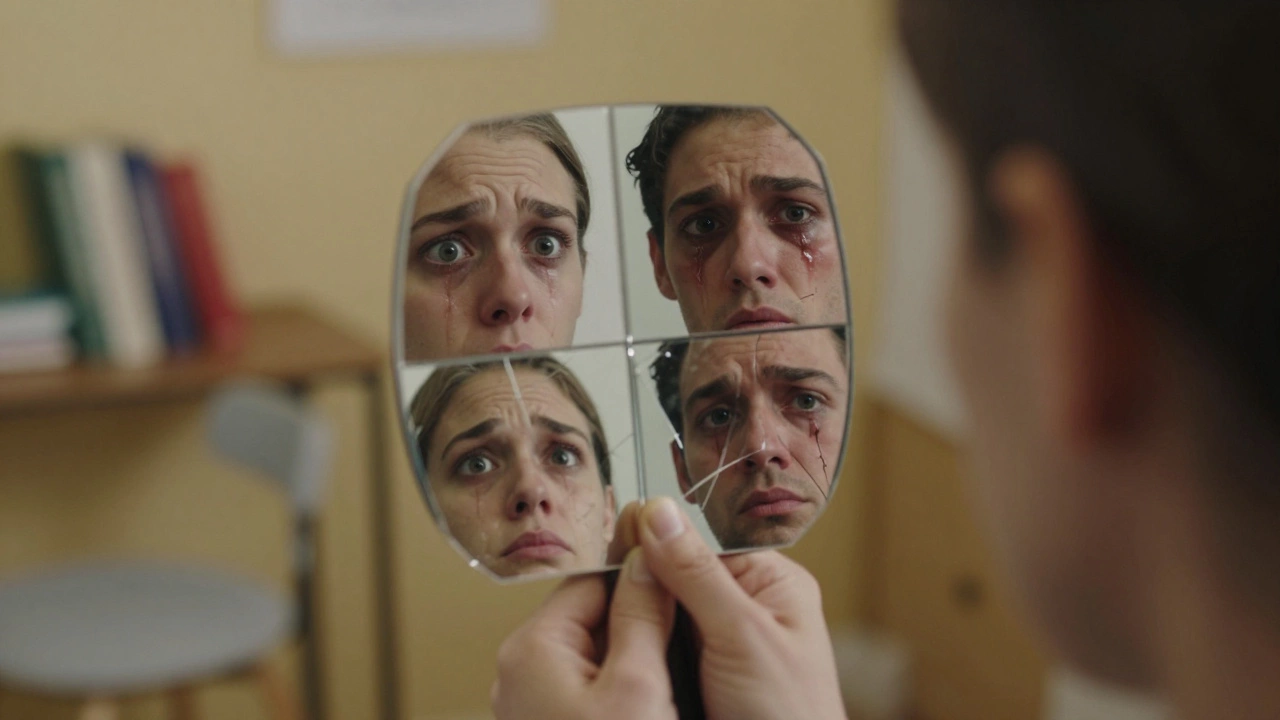
Psychotic disorders are the least common but often the most misunderstood. Schizophrenia is the most well-known. It’s not about having multiple personalities-that’s a myth. It’s about losing touch with reality. People with schizophrenia might hear voices that aren’t there, believe they’re being watched or controlled, or think their thoughts are being broadcast to others.
These symptoms aren’t imagination. They’re real to the person experiencing them. And they’re not caused by drugs or trauma alone-though those can trigger them. Genetics, brain chemistry, and early brain development all play a role. About 1% of the population will develop schizophrenia in their lifetime.
Early signs can be subtle: withdrawing from friends, talking in confusing ways, neglecting personal hygiene. If caught early, treatment with antipsychotic medication and structured therapy can help people live full, independent lives. Many people with schizophrenia work, have families, and contribute to their communities. The stigma is the biggest barrier-not the illness itself.
Personality Disorders
Personality disorders are different from the others because they’re not episodes. They’re deep, long-standing patterns of thinking and behaving that start in adolescence or early adulthood and don’t change easily. The most talked-about ones are borderline, narcissistic, and antisocial personality disorders.
Borderline personality disorder (BPD) is often misunderstood. People with BPD feel emotions intensely and fear abandonment more than most. They might have unstable relationships, sudden mood shifts, impulsive behavior, and even self-harm. But they’re not "manipulative"-they’re in pain. With dialectical behavior therapy (DBT), many people with BPD learn to regulate their emotions and build healthy relationships.
Narcissistic personality disorder involves a deep need for admiration, a lack of empathy, and a sense of superiority. Antisocial personality disorder is marked by disregard for rules and other people’s rights-sometimes leading to criminal behavior. These aren’t just personality quirks. They’re patterns that cause real suffering to the person and those around them.
Therapy is the only effective treatment. Medication doesn’t fix personality disorders. But with consistent, long-term therapy, people can learn to manage their behaviors and build better lives. Recovery is slow, but it’s possible.
Why This Matters
Understanding these four types isn’t about putting people in boxes. It’s about knowing what help is available. If you’re struggling, knowing which category your symptoms fit into can guide you to the right treatment. Anxiety? Try CBT. Mood swings? Look into mood stabilizers. Hearing voices? Seek a psychiatrist. Relationship chaos? DBT might help.
And if you’re worried about someone else-family, friend, coworker-recognizing these patterns can help you respond with compassion instead of frustration. Mental health conditions aren’t choices. They’re medical issues, just like diabetes or asthma. The brain is part of the body. When it gets sick, it needs care.
The biggest myth? That mental health problems mean you’re weak. The truth? People with mental health conditions are often some of the strongest people you’ll meet. They’re fighting battles no one else can see.
Can mental health conditions be cured?
Many mental health conditions can be managed effectively, and some people recover fully. Anxiety and depression often respond well to therapy and lifestyle changes. Mood disorders like bipolar require ongoing treatment but can be stabilized. Psychotic disorders like schizophrenia may need lifelong medication, but many people lead independent lives. Personality disorders take years of therapy, but improvement is possible. "Cured" isn’t always the right word-"managed" is more accurate.
Are mental health conditions genetic?
Genetics play a role, but they’re not the whole story. If a close family member has depression, your risk might be 2-3 times higher. For schizophrenia, the risk jumps to about 10% if a parent has it. But environment matters just as much. Trauma, stress, childhood experiences, and even diet can trigger or worsen conditions. It’s a mix-genes load the gun, environment pulls the trigger.
Can you have more than one type at once?
Yes, it’s common. About 60% of people with one mental health condition have at least one other. Anxiety often comes with depression. Borderline personality disorder frequently overlaps with mood disorders. People with schizophrenia might also struggle with substance use. This is called comorbidity. Treatment needs to address all conditions together-not one at a time.
Do children get mental health conditions?
Absolutely. Anxiety and depression can start as early as age 6. ADHD, autism, and oppositional defiant disorder are also classified as mental health conditions in young people. Early intervention is critical. A child with untreated anxiety is more likely to struggle in school, develop substance use, or drop out. Schools and pediatricians are increasingly trained to spot early signs.
Is therapy better than medication?
It depends. For mild to moderate anxiety and depression, therapy alone often works better than medication. For severe cases-like psychosis or bipolar disorder-medication is essential. Therapy helps you understand triggers and build coping skills. Medication helps balance brain chemistry. The best outcomes usually come from using both. There’s no one-size-fits-all answer.
Where to Go Next
If you’re wondering whether what you’re feeling fits into one of these categories, start with a trusted GP or mental health professional. Don’t self-diagnose using online quizzes. Real diagnosis takes time, questions, and often multiple sessions. In Australia, services like Beyond Blue and Lifeline offer free support. You don’t need to wait until things feel unbearable to ask for help. The sooner you start, the better your chances of recovery.