

Lipo 360 Results Estimator
Adjust the sliders below to see how different factors might influence your expected waist reduction. This is an estimation tool for educational purposes only.
Estimated Waist Reduction
Most patients see a reduction of 2 to 4 inches around their waist.
You’re sitting in a consultation room, staring at your midsection, wondering if that number on the scale is going to drop or if those stubborn pockets of fat are finally going to disappear. You’ve heard about Lipo 360, which is a comprehensive liposuction procedure targeting the entire torso circumference for a balanced, sculpted look. The surgeon mentions "inches," and suddenly you’re imagining a smaller waistline, tighter clothes, and a completely different silhouette. But here’s the hard truth: liposuction isn’t weight loss. It’s body contouring. So, how many inches do you actually lose?
The short answer? Most patients see a reduction of 2 to 4 inches around their waist after Lipo 360. Some might see up to 6 inches, but that’s less common and depends heavily on your starting anatomy, skin elasticity, and the surgeon’s technique. Let’s break down why the numbers vary, what affects your results, and how to set realistic expectations before you even step into the operating room.
Why Inches Matter More Than Pounds
If you’re expecting to jump from a size 12 to a size 8 overnight, you need to adjust your mindset. Liposuction removes fat cells, not pounds of weight. A gallon of fat weighs about 8.5 pounds, but surgeons rarely remove that much in one session due to safety limits. In the UK, most ethical surgeons cap removal at 5 liters (about 11 pounds) of total aspirate (fat plus fluid).
So why do we talk about inches? Because fat is dense and takes up space. Removing even 1-2 liters of pure fat can significantly change your shape. Think of it like deflating a balloon slightly-the volume drops, but the weight doesn’t change dramatically. Your jeans might fit looser, your shirt might drape differently, but the scale might barely move. That’s normal. That’s expected. And honestly, that’s the goal.
What Exactly Is Lipo 360?
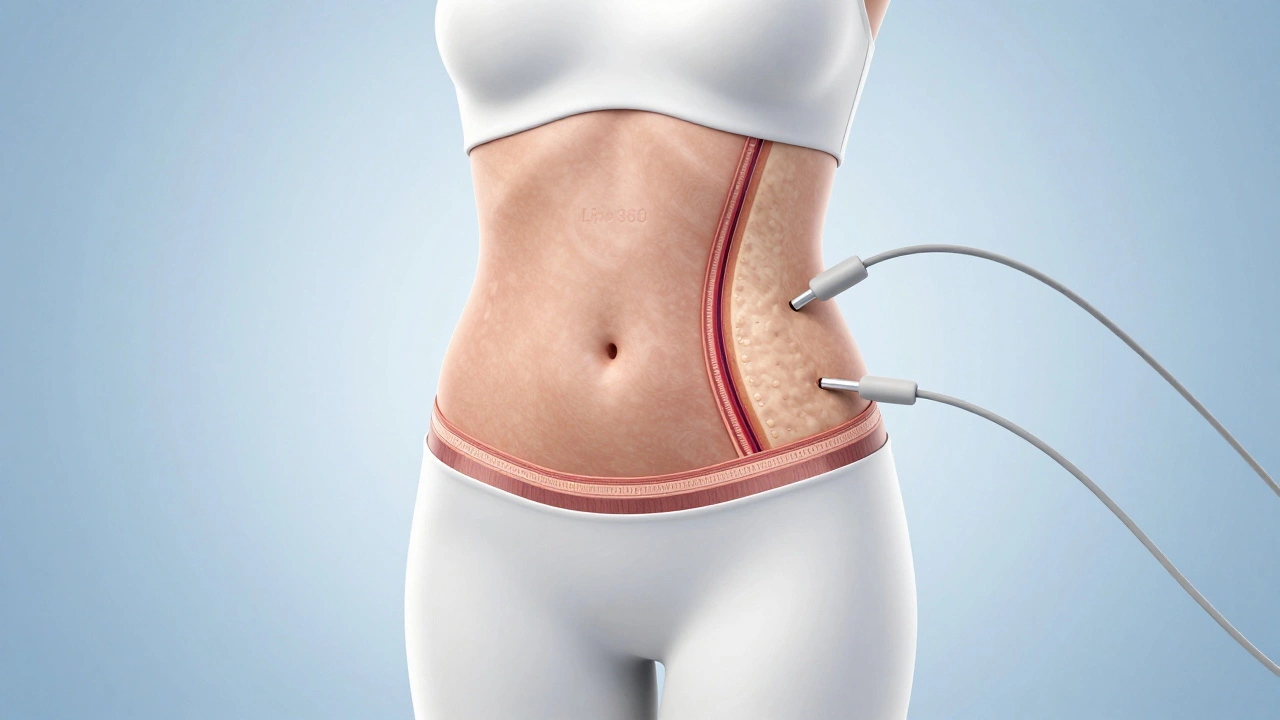
Lipo 360 is not a specific medical device, but a marketing term for circumferential liposuction of the abdomen, flanks, and back. Unlike traditional liposuction that targets one area-say, just the love handles or just the belly-Lipo 360 treats the entire midsection as one unit. This creates a smoother transition between areas, avoiding that "patchy" look where one spot looks slim and another still holds onto fat.
In practice, this means incisions are placed strategically around the navel, along the bikini line, and sometimes near the bra line. The surgeon uses cannulas to break up and suction out fat deposits from the front, sides, and back simultaneously. The result? A more harmonious curve rather than isolated dips.
This approach is popular among patients who want a "hourglass" figure or those who have gained weight post-pregnancy or after significant weight loss. It’s also favored by men seeking a flatter, more defined torso without looking overly muscular.
Factors That Determine How Many Inches You’ll Lose
Not everyone loses the same amount. Here’s what really matters:
- Skin Elasticity: If your skin snaps back quickly, you’ll see better contouring. Loose skin may require additional procedures like a tummy tuck.
- Fat Distribution: People with localized, firm fat deposits often see more dramatic inch loss than those with diffuse, soft fat.
- Surgeon Technique: Tumescent liposuction, laser-assisted lipo, and ultrasound-guided methods all yield different results. Experienced surgeons know how to preserve natural curves while removing excess.
- Starting Size: Patients closer to their ideal weight tend to see more noticeable changes because there’s less overall volume to redistribute.
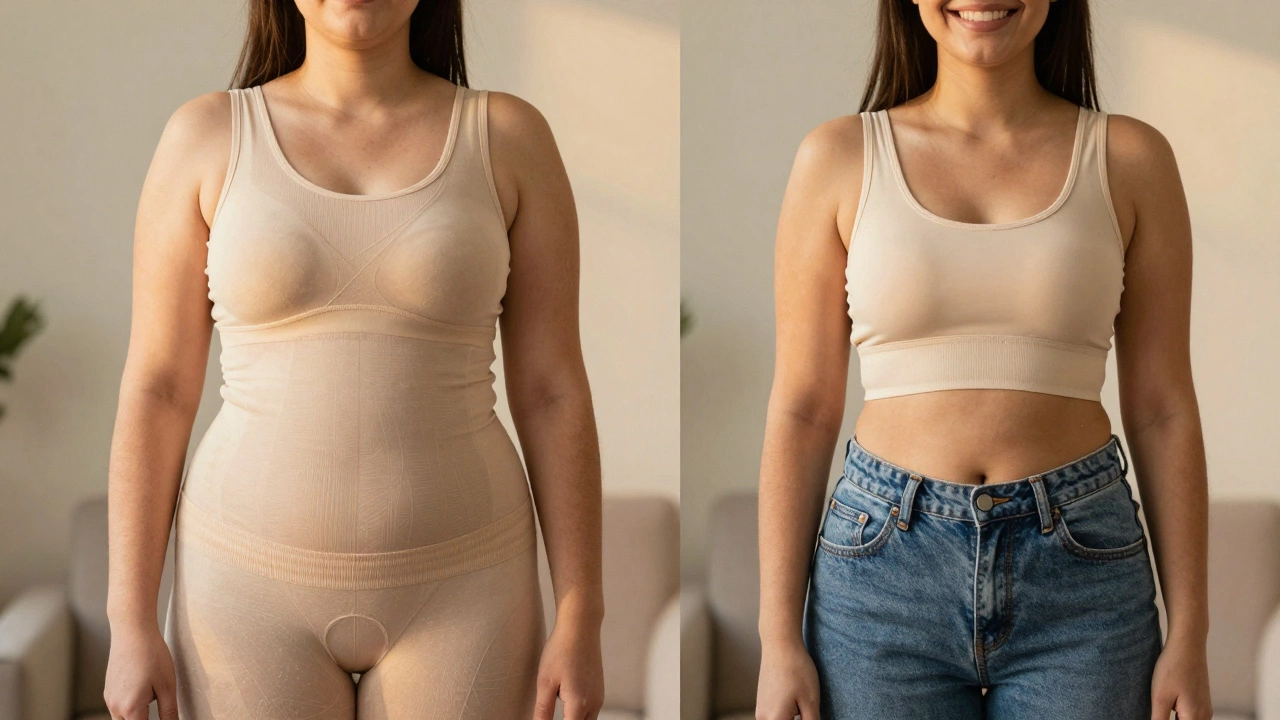
- Post-Op Care: Wearing compression garments properly and staying active during recovery helps your skin tighten and settle into its new shape.
A study published in the British Journal of Plastic Surgery found that patients undergoing circumferential liposuction reported an average waist reduction of 3.2 inches within six months. However, individual results varied widely based on these factors.
Realistic Expectations: What Does “Success” Look Like?
Let’s get real. You won’t wake up looking like a magazine model. But you will notice subtle shifts that add up. Here’s what most patients experience:
- Weeks 1-2: Swelling dominates. You might feel bloated, not slimmer. Don’t panic.
- Weeks 3-6: Swelling starts to subside. Clothes begin fitting differently. You might measure 1-2 inches off already.
- Months 3-6: Final results emerge. Skin tightens. Contours define. Most patients report losing 2-4 inches around the waist.
- Month 6+: Any further improvement is minimal. Your body has settled.
Remember: liposuction removes fat cells permanently. But if you gain weight later, remaining fat cells can expand. So maintaining your weight is crucial for long-term satisfaction.
Who Is a Good Candidate for Lipo 360?
Not everyone should undergo this procedure. Ideal candidates typically meet these criteria:
- Are within 10-15% of their ideal body weight
- Have good skin elasticity (no major sagging)
- Are non-smokers or willing to quit weeks before surgery
- Have stable weight for at least 6 months
- Understand that liposuction is not a treatment for obesity
If you’re overweight or have loose skin, you might benefit more from bariatric surgery or abdominoplasty first. Lipo 360 works best when used as a finishing touch, not a primary solution.
Cost and Availability in the UK
In the UK, Lipo 360 costs range from £4,000 to £8,000 depending on the clinic, surgeon’s experience, and whether anesthesia is included. Private hospitals in London and Manchester tend to charge higher fees, while regional clinics may offer competitive rates.
Always choose a surgeon registered with the General Medical Council (GMC) and accredited by bodies like BAPRAS (British Association of Plastic, Reconstructive and Aesthetic Surgeons). Avoid bargain deals-they often cut corners on safety, equipment, or follow-up care.
| Technique | Average Waist Reduction | Recovery Time | Best For |
|---|---|---|---|
| Tumescent Lipo | 2-4 inches | 2-4 weeks | General contouring |
| Laser-Assisted Lipo | 2-3 inches | 1-3 weeks | Skin tightening + fat removal |
| Ultrasound-Guided Lipo | 3-5 inches | 3-6 weeks | Precise targeting, complex cases |
Common Mistakes to Avoid
I’ve seen too many patients go in with unrealistic goals. Here’s how to avoid disappointment:
- Don’t expect dramatic weight loss. Focus on shape, not scale.
- Don’t rush into surgery. Take time to research surgeons, read reviews, and consult multiple professionals.
- Don’t skip compression garments. They help reduce swelling and support healing.
- Don’t ignore aftercare. Massage, lymphatic drainage, and gentle movement aid recovery.
- Don’t compare yourself to others. Everyone’s body responds differently.
When to Consider Alternatives
If you’re struggling with loose skin, large amounts of excess tissue, or significant weight fluctuations, Lipo 360 alone might not give you the results you want. In those cases, consider combining it with:
- Abdominoplasty (Tummy Tuck): Removes excess skin and tightens muscles.
- Body Lift: For massive weight loss patients needing full-body reshaping.
- Non-Surgical Options: CoolSculpting, radiofrequency treatments, or injectables for minor corrections.
Some clinics offer hybrid approaches-like lipo combined with skin-tightening technologies-to enhance outcomes. Ask your surgeon what combination makes sense for your unique situation.
How many inches can I realistically lose with Lipo 360?
Most patients lose between 2 and 4 inches around their waist. Some may see up to 6 inches, but this depends on skin elasticity, fat distribution, and surgical technique. Always discuss your specific goals with your surgeon during consultation.
Is Lipo 360 safe?
Yes, when performed by a qualified, GMC-registered surgeon in an accredited facility. Risks include infection, bleeding, asymmetry, and rare complications like fat embolism. Choose wisely and ask about the surgeon’s credentials and complication rate.
Will I lose weight after Lipo 360?
Not necessarily. Liposuction removes fat cells, not pounds. You might lose 5-10 pounds of fat, but the main benefit is improved contour, not weight reduction. The scale may not reflect the visual changes you see.
How long does it take to see final results?
Initial improvements appear within 3-6 weeks, but final results take 3-6 months as swelling subsides and skin tightens. Be patient-your body needs time to heal and adapt to its new shape.
Can I combine Lipo 360 with other procedures?
Yes, many patients combine it with tummy tucks, breast augmentation, or thigh lifts for enhanced results. Discuss your goals with your surgeon to create a personalized plan that addresses all your concerns safely.
What’s the cost of Lipo 360 in the UK?
Prices typically range from £4,000 to £8,000, depending on location, surgeon expertise, and ancillary services. Always ensure the quote includes anesthesia, facility fees, and post-op care to avoid hidden costs.
Do I need to wear compression garments after surgery?
Absolutely. Compression garments help reduce swelling, support healing tissues, and encourage skin retraction. Most surgeons recommend wearing them continuously for 4-6 weeks, then part-time for another month.
Will my results last forever?
Fat cells removed during liposuction don’t grow back. However, if you gain weight, remaining fat cells can enlarge, altering your shape. Maintain a healthy lifestyle to preserve your results long-term.