Implant Denture Hygiene & Risk Checker
Are you experiencing discomfort or noticing food getting stuck under your implant dentures? Use this checker to evaluate your current situation and determine if it's a simple hygiene fix or a sign that you need professional adjustment.
Current Symptoms & Habits
Select your symptoms above and click "Check My Risk Level" to receive personalized advice.
Result
Recommended Actions:
Quick Troubleshooting Checklist
Before booking an appointment, verify these basics. Check off what you have already tried.
Note: A chairside reline typically costs £50–£150 in private clinics.
You bite into a piece of steak or some crunchy bread, and suddenly you feel that annoying, gritty sensation. Something is stuck. You run your tongue over the ridge and realize it’s trapped underneath your implant dentures. It’s not just uncomfortable; it feels like a failure in your mouth’s architecture. If you have removable dentures anchored by implants, this isn’t a rare glitch-it’s a common reality.
The short answer is yes, food absolutely gets under implant dentures. In fact, if you’re eating anything other than pureed soup, it’s almost inevitable. But why does this happen more with implants than traditional dentures? And more importantly, how do you stop it from turning into gum inflammation or bad breath?
Why Food Traps Under Implant Dentures
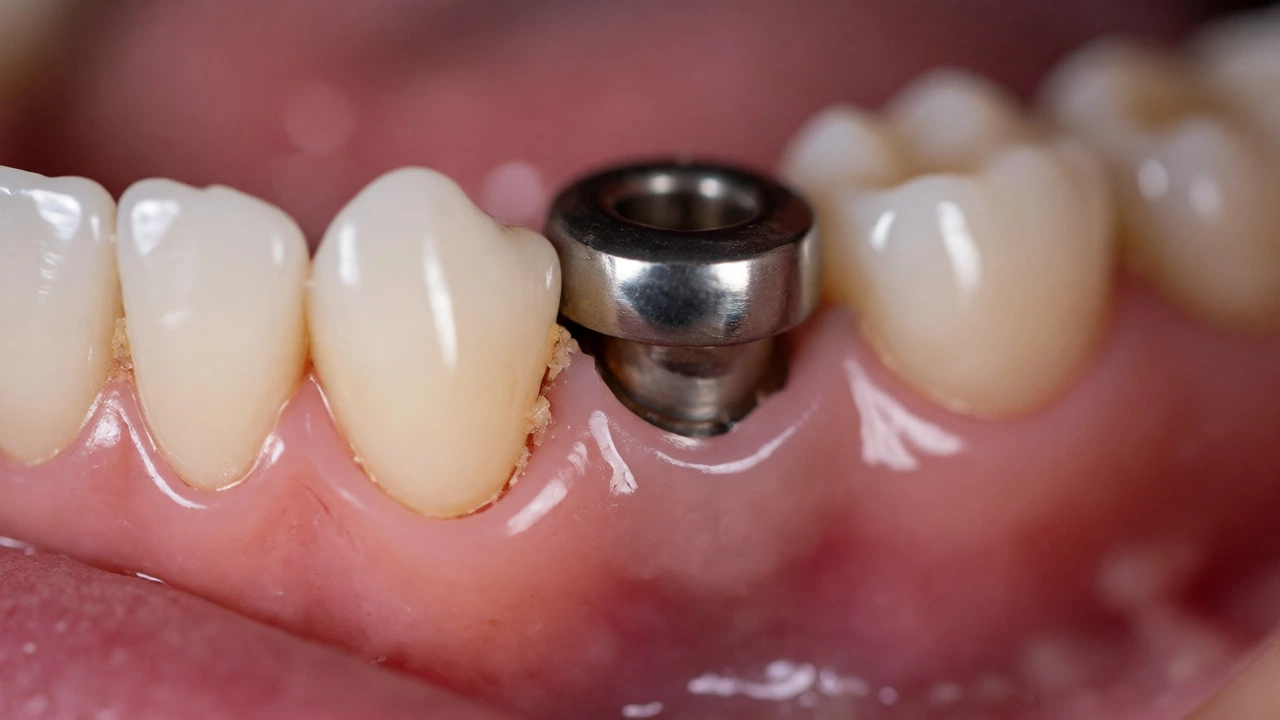
To understand the problem, you need to look at the mechanics. Traditional dentures rely on suction against the palate (for upper) or the lower ridge muscles (for lower). They are bulky because they need surface area for stability. Implant dentures, specifically overdentures, use fewer teeth and a smaller base because they clip onto abutments or bars attached to titanium posts fused to your jawbone.
This design creates gaps. Here is the physics of it:
- The Bar Gap: If you have a bar-retained system, there is a necessary space between the metal bar and your gums to allow for cleaning tools. Food loves to hide in this void.
- Ball Attachment Clearance: Ball attachments (often called locator attachments) require a small clearance so the denture can snap on and off without breaking the plastic housing. This clearance becomes a pocket for debris.
- Bone Resorption: Even with implants, your gums can shrink slightly over time, or the bone around the implant remodels. A snug fit today might have a 0.5mm gap next year. That half-millimeter is enough to trap rice grains or meat fibers.
It’s not necessarily a sign that your dentist messed up. It’s often a trade-off for having a stable, non-slip denture that doesn’t cover the entire roof of your mouth. The comfort gain comes with a maintenance cost.
The Health Risks: Why You Can’t Ignore It
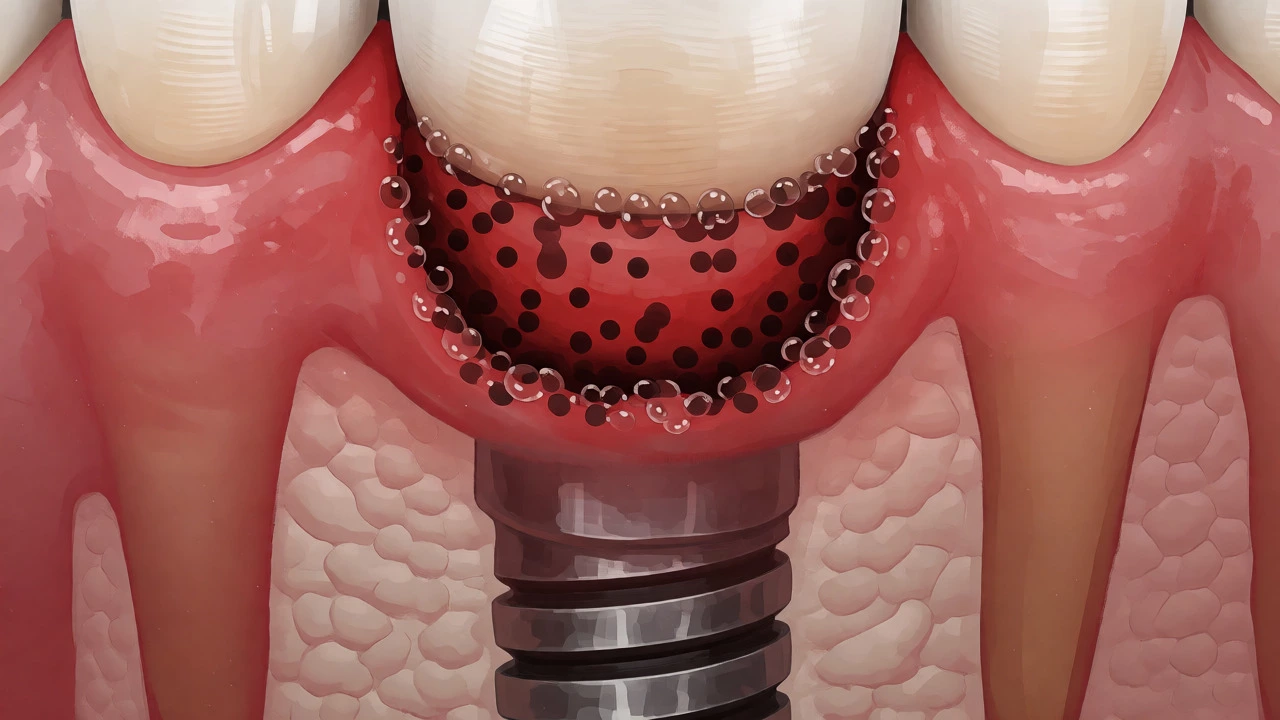
You might think, "I’ll just rinse it out later." But leaving food under an implant-supported prosthesis is riskier than leaving it under natural teeth. Why? Because the tissues around implants don’t have the same protective periodontal ligament as natural teeth. They are less resistant to bacterial invasion.
| Risk Condition | Cause | Symptoms | Long-term Consequence |
|---|---|---|---|
| Peri-implant Mucositis | Bacterial plaque buildup from trapped food irritating the soft tissue. | Redness, bleeding when brushing, mild swelling. | Reversible if caught early; leads to bone loss if ignored. |
| Peri-implantitis | Infection spreading from mucositis to the underlying bone. | Pus discharge, deep pocketing, loose implant feeling. | Irreversible bone loss; potential implant failure. |
| Denture Stomatitis | Fungal (Candida) infection thriving in warm, dark, food-filled spaces. | Burning sensation, red patches on gums under denture. | Chronic discomfort; requires antifungal treatment. |
| Bad Breath (Halitosis) | Anaerobic bacteria decomposing trapped food particles. | Persistent foul odor despite brushing teeth. | Social embarrassment; indicator of poor hygiene habits. |
The most dangerous scenario is peri-implantitis. Think of it as gum disease but faster and harder to treat. Once the bone starts dissolving around the titanium post, no amount of flossing will bring it back. Prevention is infinitely cheaper and easier than cure.
How to Clean Under Your Implant Dentures
Standard toothbrushing won’t cut it here. You need tools designed to navigate the complex geometry of implant hardware. Here is the routine that actually works, recommended by many UK-based implant specialists.
- Remove the Denture First: Never try to clean under the denture while it’s in your mouth. Take it out. Rinse both your mouth and the denture separately.
- Use Interdental Brushes: These are tiny pipe-cleaner-like brushes. Choose the size that fits snugly between your abutments or along the bar. Gently push them through the spaces. If it’s too tight, don’t force it-get a smaller size.
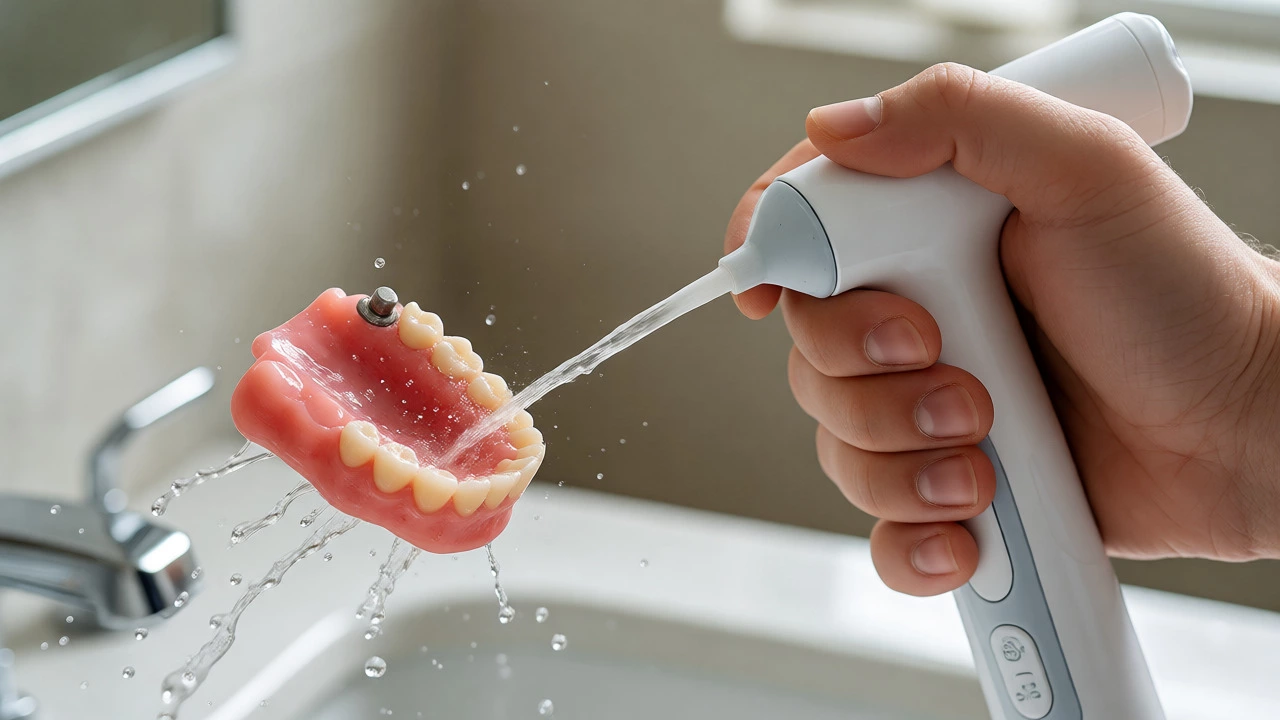
- Water Flossers Are Your Best Friend: A water flosser (like Waterpik) is arguably the most effective tool for implant denture wearers. Use it on a low-to-medium setting. Aim the jet directly at the gum line where the abutments emerge. The pressurized water flushes out debris from pockets that brushes miss. Many users report this eliminates 90% of their "stuck food" complaints.
- Clean the Denture Underside: While your mouth is healing from any irritation, scrub the inside of the denture with a soft brush and non-abrasive cleaner. Avoid regular toothpaste on acrylic; it’s too gritty and creates micro-scratches where bacteria hide.
- Check the Attachments: Look at the nylon inserts or metal housings in your denture. Are they worn out? If the clips are loose, the denture rocks, creating more gaps for food. Replace these inserts every 6-12 months.
Pro tip: Do this twice a day. Morning and night. If you snack heavily during the day, a quick rinse with water or an alcohol-free mouthwash helps prevent acid buildup from fermenting sugars.
When Is It a Fit Problem vs. a Hygiene Problem?
Sometimes, food gets trapped not because you’re lazy, but because the fit has changed. How do you tell the difference?
If food only gets stuck occasionally, especially after eating sticky foods like caramel or tough meats, it’s likely normal anatomy. However, if you notice a consistent pattern-say, always on the left side near the second molar-and you also feel movement when chewing, you have a mechanical issue.
Signs your implant denture needs adjustment:
- Rocking: Press down on one end of the denture. Does the other end lift? If yes, the attachment is loose or broken.
- Pain Points: Specific sore spots on the gums indicate pressure areas where food might be getting compacted due to uneven distribution.
- Loose Clips: If the denture pops off easily or feels "clicky" and unstable, the retention is failing. Loose dentures move more, sucking in food and air.
In these cases, no amount of flossing will fix it permanently. You need to see your dentist. They can reline the denture (add material to the fitting surface) or replace the attachment components. In the UK, NHS coverage for relines varies, but private clinics typically charge £50-£150 for a chairside reline. It’s worth every penny to restore that seal.
Dietary Adjustments to Minimize Trapping
You don’t have to live on porridge forever. But being strategic about what you eat reduces the hassle. Some foods are notorious offenders for implant denture wearers.
Avoid or Modify:
- Poppy Seeds and Sesame Seeds: These are tiny and get everywhere. They lodge in the microscopic textures of the denture base.
- Stringy Meats: Steak fibers love to wrap around abutments. Cut meat into smaller pieces and chew thoroughly before swallowing.
- Nuts and Berries: Whole nuts can crack attachments if bitten hard. Ground nuts or nut butters are safer. Blueberries and raspberries leave skins behind.
Enjoy Freely:
- Soft Cooked Vegetables: Steamed broccoli, carrots, and spinach break down easily.
- Moist Proteins: Chicken thighs, fish, and slow-cooked stews are easier to manage than dry roasts.
- Hydrating Foods: Soups and sauces help wash away debris naturally as you swallow.
Think of it as engineering your diet to match your hardware. If your implant system has wide gaps, avoid granular foods. If your fit is tight, you can handle crunchier items with confidence.
Professional Maintenance Schedule
Home care handles 80% of the work. Professional care handles the remaining 20%, which includes checking things you can’t see. Most UK dental practices recommend implant check-ups every 6 months, sometimes annually if your history is clean.
During these visits, ask your hygienist to:
- Probe the depths around each implant to check for bone loss.
- Replace the O-rings or nylon inserts in your denture.
- Polish the abutments to remove calculus (tartar) that home brushing missed.
- Evaluate the bite. If your natural teeth (if any remain) hit the implant denture unevenly, it causes instability and food trapping.
Skipping these appointments is false economy. A £80 check-up now prevents a £2,000 implant replacement later.
Common Myths About Implant Dentures and Food
Let’s clear up some confusion circulating in online forums.
Myth 1: "Implants fuse to the bone, so nothing can get under them." False. The implant itself is buried in the bone. The part you see is the abutment, and above that sits the denture. The interface between the denture and your gums is exactly where food traps occur.
Myth 2: "If I have implants, I don’t need to clean my denture." Dangerous. The denture is still a foreign body covered in biofilm. If you don’t clean it, you’re essentially putting a dirty plate back into your mouth every morning.
Myth 3: "Food trapping means my implants are failing." Not necessarily. It usually means the fit has loosened slightly or you ate something tricky. Only persistent pain, bleeding, or mobility indicates failure.
Troubleshooting Checklist
Before you book an emergency appointment, run through this checklist:
- [ ] Did I take the denture out to clean it?
- [ ] Did I use a water flosser or interdental brush?
- [ ] Are the attachment clips tight?
- [ ] Is the denture sitting flat on the gums?
- [ ] Have I rinsed thoroughly with warm salt water to reduce inflammation?
If you’ve done all of this and food still packs in relentlessly within minutes of eating, call your dentist. You likely need a reline or attachment replacement.
Is it normal for food to get stuck under new implant dentures?
Yes, especially in the first few weeks. Your mouth is adjusting to the new shape, and the tissues may be slightly swollen, creating temporary gaps. As the swelling goes down and you learn how to manipulate the denture, the issue often decreases. However, if it persists beyond a month, ask for a review.
Can food under dentures cause implant failure?
Indirectly, yes. Trapped food harbors bacteria that cause peri-implantitis, an inflammatory condition affecting the bone supporting the implant. If untreated, this leads to bone loss and eventual implant failure. Regular cleaning prevents this cascade.
What is the best tool for cleaning under implant dentures?
A water flosser (oral irrigator) is widely considered the most effective tool for flushing debris from under bars and around abutments. Interdental brushes are excellent secondary tools for specific tight spots. Combining both yields the best results.
How often should I replace the attachments in my implant denture?
Nylon inserts (O-rings or locators) typically last 6 to 12 months depending on usage. If your denture feels loose or clicks excessively, the attachments are worn. Replacing them restores retention and reduces food trapping caused by movement.
Does smoking affect food trapping under implant dentures?
Smoking increases gum inflammation and reduces blood flow, making tissues more susceptible to infection from trapped food. Smokers have higher rates of peri-implantitis. Quitting improves tissue health and makes managing oral hygiene easier.