
Pain Emergency Assessment Tool
Check Your Symptoms
Select any symptoms you are currently experiencing
There is a moment when pain stops being just a symptom and becomes the entire reality. You can’t think about work, you can’t enjoy a meal, and you certainly can’t sleep. The word "unbearable" isn’t hyperbole; it’s a description of your nervous system screaming for help. If you are reading this while in severe distress, know that you are not alone, and more importantly, there are concrete steps you can take right now to lower that intensity.
Pain is complex. It’s not just a signal from an injured tissue; it’s a message processed by your brain, influenced by your emotions, your history, and your environment. When that signal gets stuck on "maximum," standard advice like "just rest" or "take a pill" often falls flat. This guide breaks down exactly what to do when pain feels unmanageable, distinguishing between immediate emergencies and long-term strategies for chronic suffering.
When to Call for Emergency Help
If your pain hits you like a truck-especially if it’s in your chest, abdomen, or head-you need to act fast. Don’t wait to see if it passes. Here are the specific signs that mean you should call emergency services (000 in Australia, 911 in the US, 999 in the UK) immediately:
- Chest pressure or pain: Especially if it radiates to your jaw, arm, or back. This could be a heart attack.
- Sudden, severe headache: Often described as "the worst headache of my life." This can indicate a stroke or aneurysm.
- Abdominal rigidity: If your stomach feels hard and tender to the touch, it could be appendicitis or a perforated organ.
- Neurological changes: Confusion, slurred speech, weakness on one side of the body, or loss of bladder/bowel control.
- Trauma: Any pain resulting from a fall, car accident, or blow to the head.
In these scenarios, time is tissue. Every minute counts. Do not drive yourself. Get help now.
Immediate Steps for Non-Emergency Severe Pain
Let’s assume you’ve ruled out a life-threatening emergency. Maybe it’s a flare-up of arthritis, a terrible migraine, or a spasm in your back. The pain is still unbearable, but you’re safe. What do you do in the next hour?
- Stop moving (or move gently): If the pain is mechanical (back, joint), aggressive movement usually makes it worse. Find a position of ease. For back pain, lying on your back with pillows under your knees often relieves pressure on the spine. For migraines, lie in a dark, quiet room.
- Use temperature therapy: Heat relaxes tight muscles and improves blood flow. Ice reduces inflammation and numbs sharp pain. Try an ice pack for 15 minutes, then switch to heat. See which one your body prefers.
- Medication timing: If you have over-the-counter options like ibuprofen or acetaminophen, take them as directed on the label. Don’t wait until the pain is at a 10/10 to start treating it. Consistency matters more than dosage spikes.
- Breathe through the panic: Pain triggers fear, and fear tenses muscles, which increases pain. It’s a vicious cycle. Try box breathing: inhale for 4 seconds, hold for 4, exhale for 4, hold for 4. This activates your parasympathetic nervous system, telling your body it’s safe to relax slightly.
Understanding the Pain Cycle
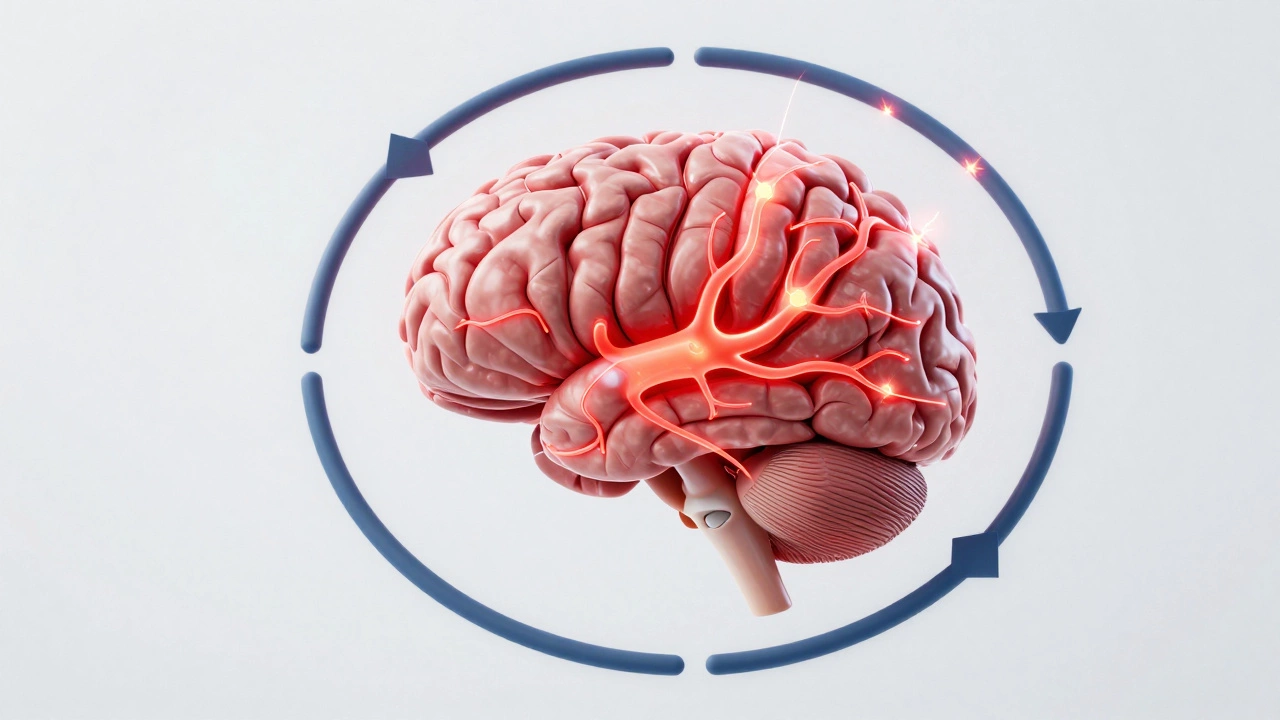
To manage pain, you have to understand what it actually is. Many people view pain as a direct readout of tissue damage. That’s only half true. In acute injuries, yes, pain warns you to protect the area. But in chronic situations, the alarm system itself breaks.
Think of it like a smoke detector that goes off because you’re cooking bacon, not because there’s a fire. Your nerves are firing normally, but your brain is interpreting those signals as catastrophic. This is why someone with a mild pinched nerve might feel excruciating pain, while another person with a similar injury feels little discomfort. Your brain’s volume knob is turned up too high.
Recognizing this shifts the goalpost. You aren’t trying to "fix" invisible damage; you’re trying to calm an overactive alarm system. This requires a multi-pronged approach, not just a stronger painkiller.
Medical Interventions to Discuss with Your Doctor
If home care isn’t cutting it, it’s time to escalate professionally. Don’t suffer in silence hoping it’ll go away. Here are evidence-based treatments you should ask your healthcare provider about:
| Treatment Type | Best For | Key Considerations |
|---|---|---|
| NSAIDs & Analgesics | Inflammatory pain, headaches, minor injuries | Short-term use is generally safe. Long-term use can affect kidneys and stomach lining. |
| Opioids | Severe acute pain (post-surgery, trauma) | High risk of dependence. Not recommended for most chronic non-cancer pain due to tolerance and side effects. |
| Corticosteroid Injections | Joint inflammation, sciatica, tendonitis | Provides temporary relief (weeks to months). Can weaken tissues if used too frequently. |
| Nerve Blocks | Localized nerve pain (e.g., trigeminal neuralgia) | Anesthetic injected near specific nerves. Diagnostic and therapeutic. |
| Antidepressants/Anticonvulsants | Neuropathic pain (nerve damage, fibromyalgia) | Drugs like gabapentin or duloxetine calm nerve signaling, not just mood. |
Be honest with your doctor about what you’ve tried and what hasn’t worked. Ask specifically: "Is this nociceptive pain (tissue damage) or neuropathic pain (nerve damage)?" The answer dictates the treatment path. Treating nerve pain with anti-inflammatories is like using a wrench to fix a software glitch-it’s the wrong tool.
The Role of Movement and Physiotherapy
It sounds counterintuitive, but resting too much often makes chronic pain worse. Bed rest leads to muscle atrophy, stiffness, and increased sensitivity. The goal isn’t to push through agony, but to introduce gentle movement to desensitize the nervous system.
A qualified physiotherapist can design a graded exposure plan. This means starting with movements that cause zero pain, then gradually increasing the load. Over time, your brain learns that movement is safe. Activities like walking, swimming, or tai chi are excellent because they are low-impact and rhythmic. Rhythm helps distract the brain and promotes relaxation.
If you’re afraid of moving because you think you’ll re-injure yourself (kinesiophobia), talk to your therapist about this fear. It’s a common barrier to recovery. They can help you build confidence step-by-step.

Mental Health and Pain Coping Strategies
You cannot separate the mind from the body when it comes to pain. Stress, anxiety, and depression lower your pain threshold. Conversely, chronic pain causes stress, anxiety, and depression. It’s a feedback loop.
Cognitive Behavioral Therapy (CBT) for pain is not about "thinking positive." It’s about changing how you respond to pain signals. Instead of catastrophizing ("This will never end, I’m ruined"), you learn to acknowledge the sensation without attaching a narrative of doom. Mindfulness meditation has strong clinical backing for this. Studies show that regular mindfulness practice can reduce the perceived intensity of pain by altering activity in the brain’s pain-processing centers.
Try this simple exercise: When pain flares, instead of fighting it, observe it. Notice its location, its quality (burning, throbbing, stabbing), and its intensity. Breathe into that space. This doesn’t make the pain disappear, but it removes the secondary layer of suffering caused by resistance and fear.
Lifestyle Adjustments for Long-Term Relief
Sleep, diet, and hydration play massive roles in pain management. Poor sleep lowers your pain tolerance significantly. Just one night of bad sleep can make you feel twice as painful the next day. Prioritize sleep hygiene: cool room, no screens before bed, consistent schedule.
Dietarily, focus on anti-inflammatory foods. Omega-3 fatty acids (found in fish, flaxseeds), turmeric, ginger, and leafy greens can help reduce systemic inflammation. Conversely, sugar, refined carbs, and processed meats can spike inflammation. Hydration is also key; dehydrated discs in the spine and stiff joints hurt more. Aim for clear urine as a simple metric.
Finally, consider your social support. Isolation amplifies pain. Connect with others who understand. Whether it’s a support group, a friend, or a family member, sharing your burden lightens it. You don’t have to carry this alone.
How do I know if my pain is an emergency?
If pain is sudden, severe, and accompanied by chest pressure, confusion, weakness, or difficulty breathing, call emergency services immediately. Sudden "worst-ever" headaches or abdominal rigidity also require urgent care.
Can chronic pain be cured?
While some chronic pain conditions may resolve, many are managed rather than cured. The goal is functional improvement and reduced pain intensity through a combination of medical, physical, and psychological strategies.
Is it safe to take painkillers every day?
Long-term daily use of certain painkillers, especially opioids and NSAIDs, carries risks like addiction, kidney damage, and stomach bleeding. Always consult a doctor for a sustainable long-term plan.
Does exercise make chronic pain worse?
Initially, it might seem so, but gentle, graded movement is crucial for long-term relief. Resting too much leads to stiffness and increased sensitivity. Work with a physiotherapist to find the right intensity.
How does stress affect pain levels?
Stress tightens muscles and heightens nervous system sensitivity, lowering your pain threshold. Managing stress through therapy, mindfulness, or relaxation techniques can significantly reduce perceived pain intensity.