
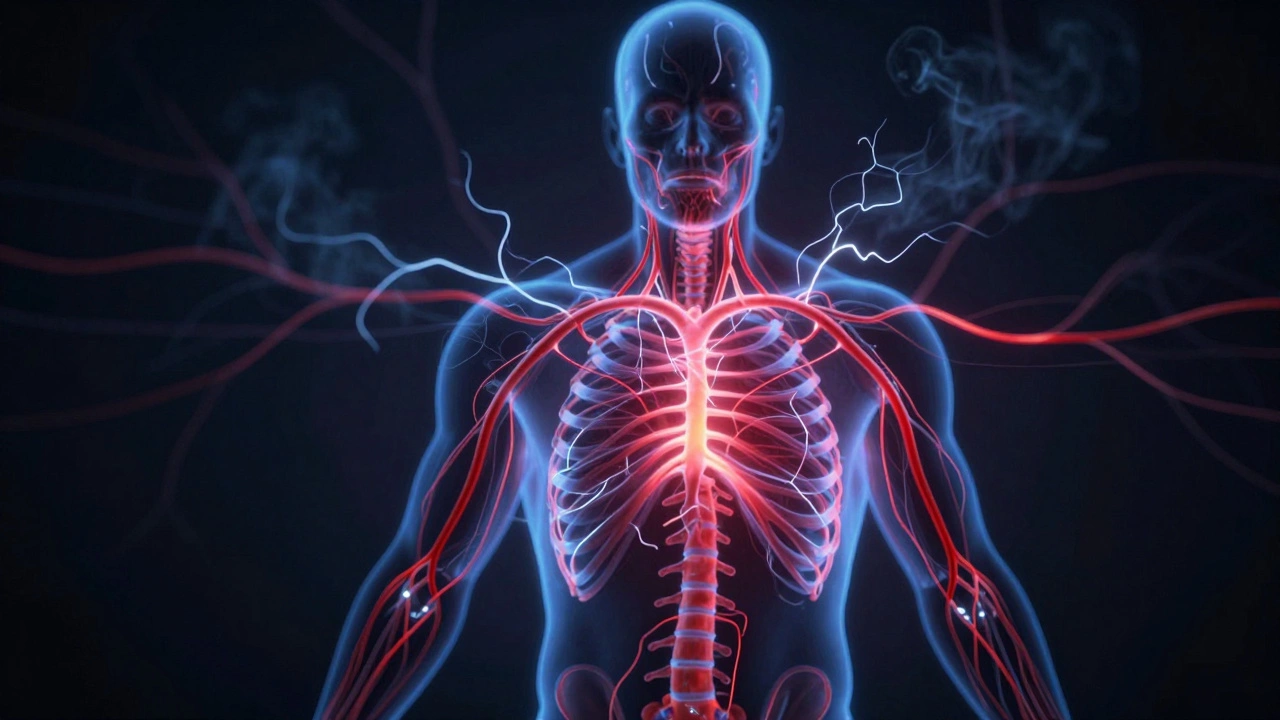
Most people reach for painkillers when they hurt - a headache, a sprained ankle, a sore back. And for a lot of those cases, ibuprofen or paracetamol works fine. But if your pain sticks around, no matter how many pills you take, something deeper is going on. Not all pain is the same. Some kinds of pain don’t respond to painkillers because they’re not caused by damage you can heal with medicine. They’re caused by your own nervous system going haywire.
When Pain Becomes a False Alarm
Think of your nervous system like a smoke alarm. It’s supposed to go off when there’s a real fire. But sometimes, after a big fire, the alarm keeps beeping even when there’s no smoke. That’s what happens in chronic pain. Your nerves start sending pain signals even when there’s no injury left to heal. This is called central sensitization. It’s not in your head - it’s in your spinal cord and brain. The system gets stuck on high alert. Painkillers target inflammation or block pain signals at the source. But if the source is your brain misfiring, those drugs just don’t reach the right place.
Nerve Pain: The Electric Kind
Not all chronic pain feels the same. Some people describe it as burning, stabbing, or like an electric shock. That’s nerve pain - or neuropathic pain. It happens when nerves themselves get damaged or irritated. Think diabetic neuropathy, sciatica from a pinched nerve, or post-shingles pain. These aren’t muscle aches. They’re not caused by swelling. Painkillers like ibuprofen or even codeine barely touch this kind of pain. That’s because they don’t calm down overactive nerves. Instead, medications like gabapentin, amitriptyline, or duloxetine are used. These don’t just numb pain. They change how nerves send signals.
Migraines: More Than a Headache
If you’ve had a migraine, you know it’s not just a bad headache. It’s nausea, light sensitivity, sometimes vomiting, and pain that feels like a hammer pounding behind your eyes. Regular painkillers might help a little at the very start. But once the migraine is fully rolling, they’re useless. Why? Migraines are a neurological event. Blood vessels dilate, chemicals flood the brain, and nerves get overstimulated. Painkillers can’t reverse that process. Specific migraine meds like triptans work because they target serotonin receptors and constrict blood vessels. Without those, painkillers are just noise.
Fibromyalgia: The Invisible Storm
Fibromyalgia affects about 2-4% of adults. It causes widespread pain, fatigue, and brain fog. People with fibromyalgia often say they’ve tried every painkiller under the sun. And they’re right - most don’t help. Why? Fibromyalgia isn’t inflammation. It’s not arthritis. It’s a dysfunction in how the brain processes pain signals. Studies show people with fibromyalgia have higher levels of substance P, a chemical that amplifies pain. Their pain threshold is lower. That’s why drugs like pregabalin or milnacipran are prescribed. They don’t kill pain. They reset the system. Painkillers? They’re like trying to put out a wildfire with a water bottle.
Complex Regional Pain Syndrome: Pain That Spreads
After a minor injury - a sprained ankle, a broken wrist - some people develop CRPS. The pain doesn’t fade. It spreads. The skin gets shiny, swollen, hot or cold. Moving the limb feels like glass under the skin. Painkillers? Useless. This isn’t tissue damage. It’s a malfunction in the sympathetic nervous system. The body’s own healing response turns against itself. Treatment involves nerve blocks, physical therapy, and sometimes spinal cord stimulators. Not pills. Not even strong opioids help much. The pain is too deeply wired into the nervous system.
Why Painkillers Fail: The Science
Painkillers work on three main types of pain:
- Inflammatory pain - from swelling, like arthritis or a cut. NSAIDs like ibuprofen block prostaglandins. Works well here.
- Nociceptive pain - from tissue damage. Opioids can dull this.
- Neuropathic or central pain - from nerves misfiring. Painkillers don’t touch this.
When pain becomes chronic, it often shifts from the second category to the third. That’s when pills stop working. You’re not being lazy. You’re not imagining it. Your nervous system has changed. And that requires a different kind of treatment.
What Actually Works When Painkillers Don’t
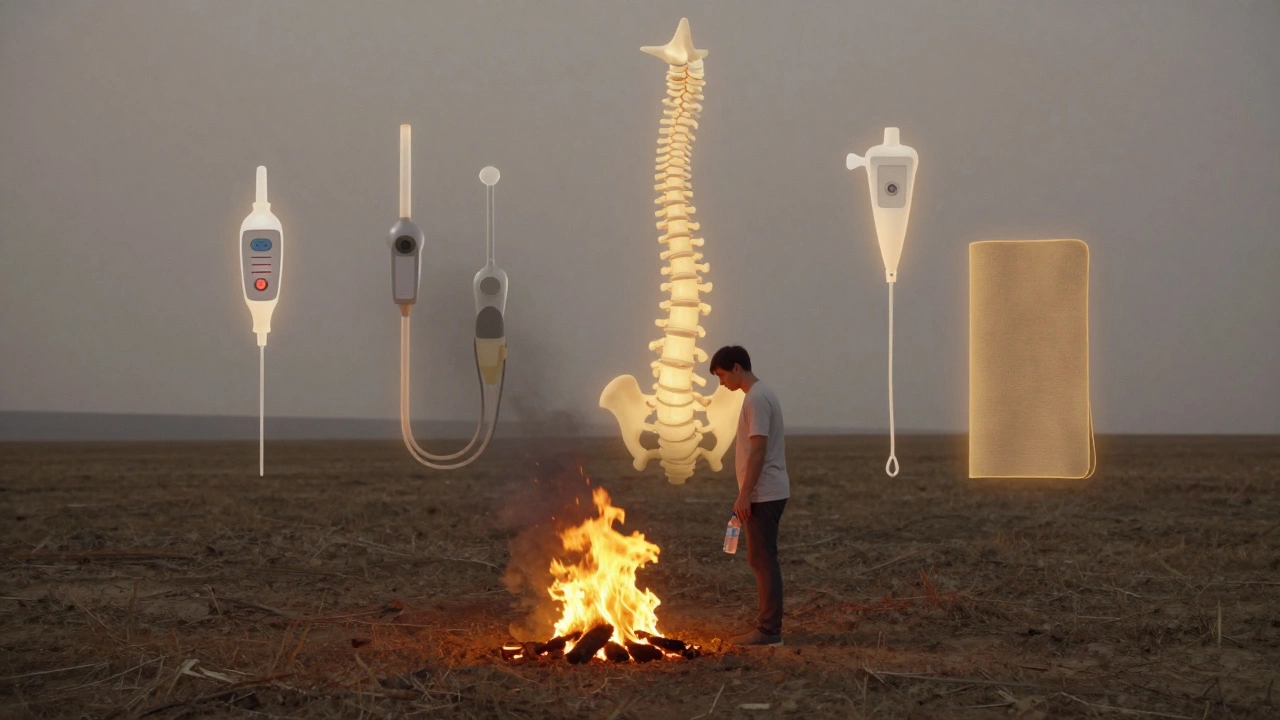
If your pain won’t quit, you need more than pills. Here’s what does work:
- Physical therapy - retraining movement patterns to reduce nerve irritation.
- Cognitive behavioral therapy (CBT) - helps your brain unlearn pain patterns. Studies show it reduces pain intensity by 30-50% in chronic cases.
- Nerve blocks or injections - temporary relief for nerve pain by numbing specific pathways.
- Spinal cord stimulation - a small device sends electrical pulses to block pain signals before they reach the brain.
- Mind-body practices - yoga, meditation, and breathing techniques lower stress hormones that worsen pain.
One patient I spoke with in Sydney - a 42-year-old teacher with CRPS - tried 14 different painkillers over three years. Nothing worked. Then she started daily physiotherapy and used a spinal stimulator. Within six months, her pain dropped from an 8/10 to a 2/10. She’s back to teaching. Not because she took more pills. Because she changed how her body and brain responded to pain.
When to See a Specialist
If you’ve been taking painkillers for more than 6 weeks and they’re not helping, it’s time to see a pain specialist. General practitioners can only do so much. Pain clinics have access to neurologists, physiotherapists, psychologists, and pain specialists who understand the full picture. Don’t wait until you’re trapped in a cycle of increasing doses and side effects. Chronic pain isn’t a failure of medicine. It’s a signal that you need a different approach.
Final Thought: Pain Isn’t Always a Symptom - Sometimes It’s the Disease
Chronic pain isn’t just pain that lasts. It’s pain that becomes its own condition. When painkillers fail, it’s not because you’re weak. It’s because the pain has moved beyond the reach of pills. The good news? Science now understands these conditions better than ever. There are real, evidence-based tools out there. You just have to find the right ones - not more pills, but better systems.