
Facial Rejuvenation Procedure Estimator
Procedure Comparison
Compare the three main facial rejuvenation options discussed in the article.
| Feature | Thread Lift | Surgical Facelift | Dermal Fillers |
|---|---|---|---|
| Time | 15–30 min | 3–5 hours | 15–45 min |
| Downtime | Minimal | 2–4 weeks | None/1 day |
| Duration | 6–18 months | 10+ years | 6–24 months |
| Invasiveness | Minimally Invasive | Surgical | Non-Invasive |
Cost & Suitability Calculator
Estimate your potential costs and find your best match based on priorities.
Your Recommended Option
Estimated Cost Range
Imagine walking into a clinic for your lunch break and walking out twenty minutes later with a lifted, younger-looking face. No hospital stay. No weeks of swelling. Just a quick procedure that promises to turn back the clock permanently. It sounds like the holy grail of anti-aging, doesn't it? But here is the hard truth: in the world of cosmetic surgery UK, nothing that takes twenty minutes is truly permanent. If you are chasing that headline promise, you need to understand exactly what is being sold to you before you book an appointment.
The Myth of the "Permanent" Quick Fix
When people ask about a "20-minute permanent facelift," they are usually referring to one of two things: a thread lift or a specific type of minimally invasive surgical lift using absorbable sutures. Marketing teams love the word "permanent" because it sells. However, biologically, skin elasticity changes, gravity pulls down, and tissues shift over time. A procedure that lasts only twenty minutes cannot restructure deep facial anatomy in a way that defies these laws of physics forever.
In reality, most "quick" facelifts are temporary solutions designed to mimic the look of surgery without the downtime. The confusion often stems from a misunderstanding of medical terminology. Some clinics may claim the results are long-lasting, but "long-lasting" in the world of injectables and threads usually means six months to two years, not a lifetime. Understanding this distinction is crucial for managing expectations and protecting your wallet.
Thread Lifts: The Most Common "Quick" Option
Thread lifts are minimally invasive procedures where dissolvable sutures are inserted under the skin to lift sagging tissue. This is likely the procedure you have seen advertised as a rapid facelift. During a thread lift, a doctor inserts barbed or cogged threads under the skin of the cheeks, jawline, or brows. These threads physically hook onto the tissue and pull it upward, creating an immediate lifting effect.
The process typically takes between fifteen and thirty minutes, fitting perfectly into that "lunchtime procedure" narrative. Once the threads are in place, your body begins to produce collagen around them. This collagen production can improve skin texture and thickness, adding some longevity to the result. However, the threads themselves are made of materials like polydioxanone (PDO) or polylactic acid (PLLA), which dissolve completely within four to six months.
So, why do some people say the results last longer? Because the new collagen remains after the thread dissolves. But this residual lift is subtle. For most patients, the dramatic "lifted" look fades significantly within six to twelve months. To maintain the appearance, you would need repeat treatments every year or so. It is a maintenance plan, not a one-time permanent fix.
Surgical Facelifts vs. Non-Surgical Alternatives
To truly grasp the limitations of a twenty-minute procedure, you have to compare it to the gold standard: a traditional surgical facelift. A surgical rhytidectomy involves making incisions, separating the skin from the underlying muscle, tightening the SMAS (superficial musculoaponeurotic system) layer, removing excess skin, and stitching everything back together. This process takes three to five hours under general anesthesia or deep sedation.
The recovery is significant. You will have bruising, swelling, and tightness for several weeks. But the results? They can last ten to fifteen years or more. That is true permanence in the context of aging. In contrast, non-surgical options like thread lifts, fillers, and energy-based devices (such as Ultherapy) offer incremental improvements with minimal downtime. They treat symptoms-like loose skin or volume loss-without addressing the root structural changes caused by aging.
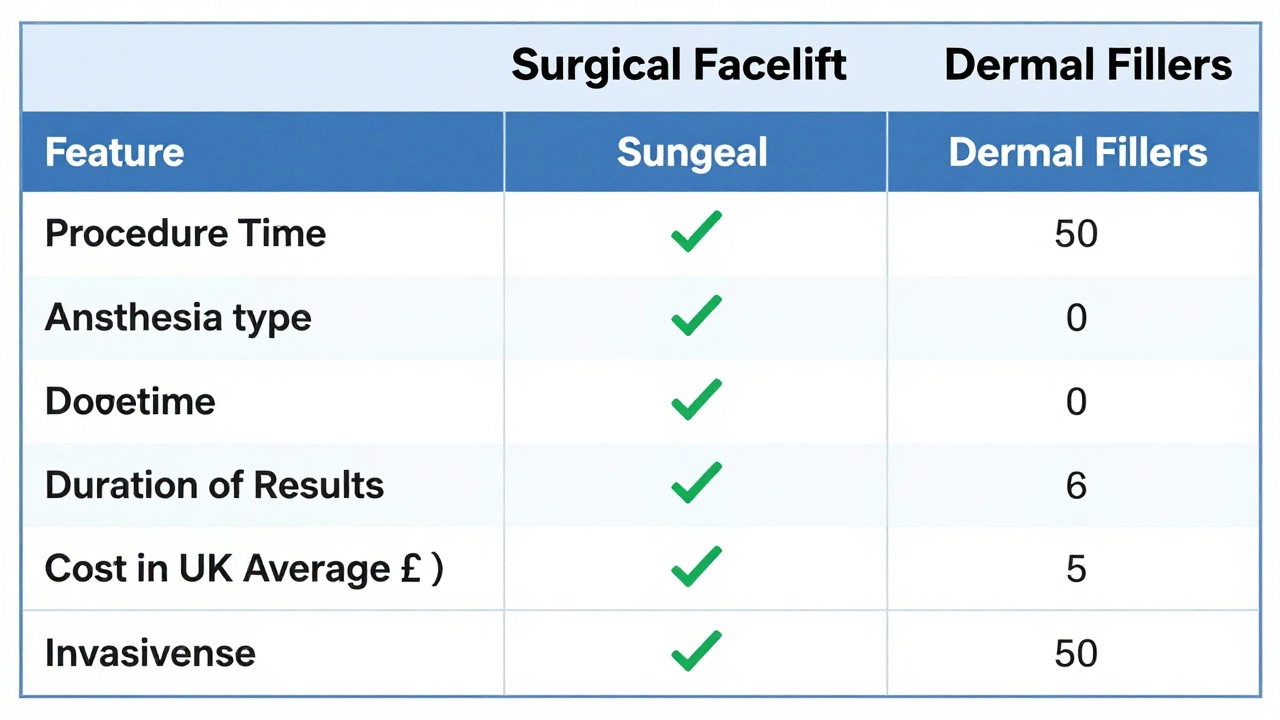
| Feature | Thread Lift | Surgical Facelift | Dermal Fillers |
|---|---|---|---|
| Procedure Time | 15-30 minutes | 3-5 hours | 15-45 minutes |
| Anesthesia | Local | General/Sedation | None/Topical |
| Downtime | Minimal (bruising) | 2-4 weeks | None to 1 day |
| Duration of Results | 6-18 months | 10+ years | 6-24 months |
| Cost (UK Average) | £1,500 - £3,500 | £5,000 - £10,000+ | £300 - £600 per syringe |
| Invasiveness | Minimally Invasive | Surgical | Non-Invasive |
Risks and Complications to Consider
Because thread lifts are marketed as easy and safe, many people underestimate the risks. While complications are rare when performed by experienced professionals, they can be serious. One of the most visible issues is thread extrusion, where the thread works its way out through the skin, leaving small dimples or puckering on the surface. This can happen if too much tension is applied during insertion or if the patient moves their face excessively during recovery.
Infection is another risk, though less common than with open surgery. More concerning is the potential for nerve injury. The face is densely packed with nerves that control expression. If a thread is placed incorrectly, it can temporarily or, in rare cases, permanently affect muscle movement, leading to asymmetry or weakness. Asymmetry itself is a common complaint; achieving perfect balance with threads is difficult because the threads rely on friction and tissue grip rather than secure anchoring.
It is also worth noting that thread lifts are not suitable for everyone. People with severe skin laxity or heavy jowls will see little benefit from threads alone. The procedure works best for those with mild to moderate sagging who want a subtle refresh. If you have significant aging concerns, a thread lift might give you a false sense of improvement that fades quickly, leading to disappointment and potentially unnecessary repeat spending.
Choosing a Provider in the UK
The landscape of cosmetic treatment in the UK has become increasingly regulated, but vigilance is still required. When looking for a provider for any facial rejuvenation treatment, check their credentials thoroughly. For thread lifts and other minor procedures, you should seek out practitioners registered with recognized bodies such as the Joint Council for Cosmetic Practitioners (JCCP) or the British Association of Aesthetic Plastic Surgeons (BAAPS). If the procedure involves deeper tissue manipulation, ensure the practitioner is a medically qualified doctor or dentist with specific training in aesthetic medicine.
Avoid clinics that offer massive discounts or pressure you into booking immediately. Legitimate practitioners will take time to assess your facial anatomy, discuss realistic outcomes, and explain the risks. They will tell you if a thread lift is actually right for you or if another treatment would be more effective. Be wary of influencers promoting these treatments without disclosing potential side effects. Social media filters and lighting can make even a failed thread lift look successful in a photo.
Ask to see before-and-after photos of actual patients treated by that specific doctor, not stock images. Pay attention to the symmetry and naturalness of the results. Do the faces look pulled or tense? Are there visible dimples? These details matter. Also, inquire about the brand of threads used. Reputable brands include Silhouette Soft, Aptos, and PDO Novathread. Generic or unbranded threads may pose higher risks of inflammation or poor dissolution.
Alternative Treatments for Long-Term Results
If a twenty-minute procedure isn't cutting it for your goals, consider combining treatments for a more comprehensive approach. Many patients achieve better long-term satisfaction by pairing thread lifts with other modalities. For example, using dermal fillers to restore volume in the cheeks and temples can support the lift provided by threads. Skin tightening technologies like radiofrequency microneedling (e.g., Morpheus8) or ultrasound therapy (Ultherapy) can stimulate collagen production throughout the skin, improving texture and firmness over time.
Lifestyle factors also play a huge role in how long any cosmetic result lasts. Sun protection is non-negotiable. UV damage breaks down collagen faster than almost anything else. Wearing SPF 30 or higher daily, avoiding smoking, and maintaining a healthy diet rich in antioxidants can extend the life of your cosmetic treatments. Hydration and sleep also impact skin quality, making professional treatments look fresher for longer.
Ultimately, the decision comes down to your priorities. If you value speed and minimal downtime above all else, a thread lift might be worth trying, provided you accept that it is a temporary measure. If you want a dramatic, long-lasting change and are willing to undergo surgery and recovery, a traditional facelift remains the most effective option. There is no magic bullet in cosmetic surgery, especially not one that fits into a twenty-minute window.
Is a thread lift really permanent?
No, a thread lift is not permanent. The threads dissolve within 4 to 6 months, and the lifting effect typically lasts between 6 and 18 months depending on individual metabolism and skin quality. Any claims of permanence are misleading marketing.
How much does a thread lift cost in the UK?
Prices vary widely based on location and practitioner expertise. On average, expect to pay between £1,500 and £3,500 for a full face thread lift. Cheaper options may indicate less experienced providers or lower-quality materials.
Does a thread lift hurt?
Most clinics use local anesthesia or topical numbing cream, so discomfort is minimal. You may feel pressure or tugging sensations during insertion, but sharp pain is uncommon. Post-procedure tenderness is normal for a few days.
Who is a good candidate for a thread lift?
Ideal candidates have mild to moderate skin laxity, good skin elasticity, and realistic expectations. It works best for younger patients (30s to early 50s) wanting prevention or subtle correction. Those with severe sagging or heavy jowls are better suited for surgical options.
What are the main risks of a thread lift?
Risks include infection, thread extrusion, asymmetry, bruising, and rare nerve injury. Choosing an experienced, qualified practitioner significantly reduces these risks. Always review before-and-after photos and discuss potential complications beforehand.