

Dental Implant Eligibility Checker
Your Profile
Answer these questions based on the guidelines provided.
Assessment Result
Fill out the form and click "Check Eligibility" to see your risk assessment.
You sit in the chair, ready to finally replace that missing tooth. The dentist smiles, explains the procedure, and then drops the bomb: "I'm sorry, but you're not a candidate." It’s a frustrating moment. You’ve done your research, you’ve saved the money, and you’re prepared for the surgery. So why are you being turned away? Understanding what disqualifies you from dental implants is the first step toward finding a solution that works for your specific health profile.
In the UK, the landscape of dental care is unique. With the National Health Service (NHS) covering essential treatments and private clinics offering premium options, the criteria for eligibility can seem opaque. It isn’t just about having a cavity or needing a root canal. Dental implants are a surgical procedure that requires your body to heal and integrate with foreign materials. If certain conditions interfere with this process, the risk of failure skyrockets.
The Absolute Deal-Breakers: Medical Conditions
Not every medical condition stops you cold, but some do. These are non-negotiable because they pose immediate risks to your life or the success of the surgery.
- Uncontrolled Diabetes: High blood sugar slows healing significantly. If your HbA1c levels are consistently above 8%, most surgeons will refuse to operate until you stabilize them. The risk of infection at the implant site becomes too high.
- Severe Osteoporosis: This disease thins your bones. Implants need solid bone to anchor into. If your jawbone is too porous, the screw-like implant simply won't hold. Furthermore, medications like bisphosphonates (used to treat osteoporosis) can cause a rare but serious condition called osteonecrosis of the jaw, where bone tissue dies.
- Certain Cancers: Active cancer treatment, especially radiation therapy to the head and neck, damages blood vessels and bone structure. Surgeons typically wait at least six months to two years after treatment ends before considering implants.
- Untreated Bleeding Disorders: If you cannot clot properly, the surgical site may bleed uncontrollably, leading to complications that jeopardize the implant.
If you have any of these conditions, don't lose hope entirely. Often, managing the condition with medication or lifestyle changes can make you eligible later. The key word here is "uncontrolled" or "active."
Lifestyle Factors That Sabotage Healing
Your daily habits play a massive role in whether an implant succeeds or fails. Dentists look at these factors closely because they directly impact how your body responds to surgery.
Smoking is the biggest enemy of dental implants. Nicotine constricts blood vessels, reducing blood flow to the gums and jawbone. This means less oxygen and fewer nutrients reach the surgical site. Studies show that smokers are up to twice as likely to experience implant failure compared to non-smokers. In many UK practices, if you smoke more than five cigarettes a day, you might be disqualified outright or required to quit for several weeks before and after the procedure.
Heavy Alcohol Consumption also interferes with healing. Chronic alcohol use can suppress the immune system and affect bone density. If you drink heavily on a regular basis, your surgeon may advise against implants until your consumption decreases to moderate levels.
Poor Oral Hygiene is another major red flag. If you currently have gum disease (periodontitis), it must be treated completely before any implant work begins. Gum disease causes bone loss and infection. Placing an implant into infected tissue is a recipe for disaster. If you aren't brushing and flossing diligently now, your dentist will assume you won't maintain the implant either.
Bone Density and Jaw Structure
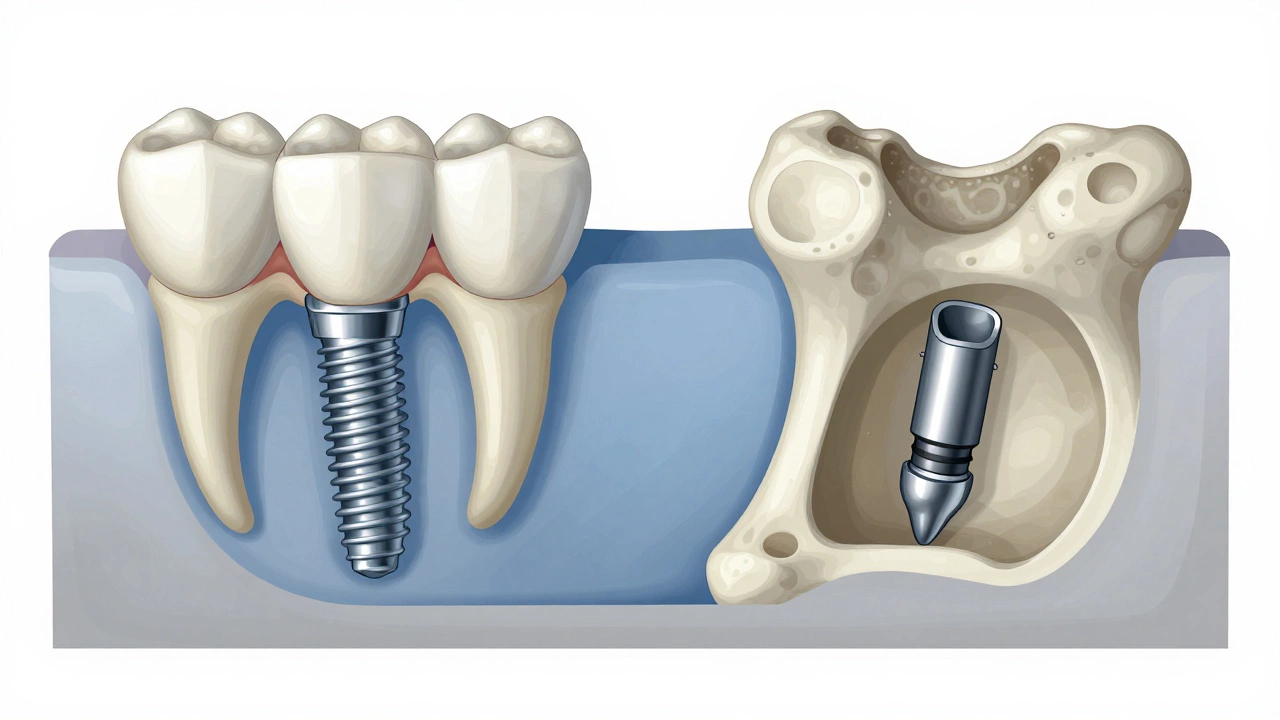
Dental implants aren't glued onto your teeth; they are screwed into your jawbone. This requires a specific amount of bone volume and density. Over time, when you lose a tooth, the jawbone in that area begins to shrink-a process called resorption. The longer you go without a tooth, the less bone you have left.
If your bone is too thin or short, standard implants won't fit. However, this doesn't always mean you're disqualified forever. There are solutions:
- Bone Grafting: This involves adding bone material to the deficient area. It takes several months to heal, but it can build up enough bone for an implant.
- Zygomatic Implants: For patients with severe upper jaw bone loss, these longer implants anchor into the cheekbone instead of the jawbone. They bypass the need for extensive grafting.
Before ruling yourself out, ask for a CBCT scan (Cone Beam Computed Tomography). This 3D imaging shows exactly how much bone you have and whether grafting is a viable option.
Age Considerations
There is no upper age limit for dental implants. As long as you are healthy, an 80-year-old can receive implants just as easily as a 40-year-old. However, there is a lower age limit. Implants are generally not recommended for anyone under 18, or sometimes even early 20s.
Why? Because your jawbone continues to grow and change shape during adolescence. If an implant is placed while the jaw is still developing, it will stay fixed in place while the surrounding bone grows around it. This can lead to misalignment, aesthetic issues, and functional problems later in life. Dentists wait until jaw growth is complete before proceeding.
NHS vs. Private: How Funding Affects Eligibility
In the UK, access to dental implants depends heavily on whether you are using the NHS or paying privately. This distinction creates different "disqualification" scenarios.
NHS Criteria: The NHS provides dental implants only in very specific circumstances. Generally, they are considered "medically necessary" rather than cosmetic. You might qualify if:
- You have lost teeth due to trauma or accident.
- You have a congenital defect (missing teeth from birth).
- You have had radiation treatment for head and neck cancer.
- A traditional bridge or denture would cause significant harm to your remaining teeth or oral health.
If your missing teeth are due to decay, neglect, or normal wear and tear, the NHS will likely disqualify you from receiving implants. They will offer bridges or dentures instead. This isn't a medical disqualification; it's a funding one.
Private Treatment: Privately, you are not restricted by NHS guidelines. As long as you are medically fit and can afford the procedure, you are eligible. Private clinics may have their own internal policies regarding smoking or bone density, but they are far more flexible than the NHS.
| Factor | NHS Coverage | Private Treatment |
|---|---|---|
| Cost | Fully covered if eligible | Out-of-pocket (£1,500 - £3,000 per implant) |
| Reason for Missing Teeth | Trauma, cancer, congenital defects | Any reason (decay, trauma, etc.) |
| Smoking Policy | Strict; often excluded | Varies by clinic; may require cessation |
| Bone Grafting | Rarely funded | Commonly included in treatment plans |
| Waiting Times | Long (6-12 months) | Short (weeks) |

Mental Health and Cognitive Ability
This is an often-overlooked factor. Dental implant treatment involves multiple stages: initial surgery, healing periods, abutment placement, and final crown fitting. It requires commitment and follow-up.
If you have severe cognitive impairments, such as advanced dementia, you may be disqualified because you cannot understand the procedure or consent to it. Similarly, unmanaged anxiety or phobias related to dental work can complicate treatment. While sedation can help, if you are unable to cooperate during the surgery due to mental health challenges, the surgeon may decline to proceed for safety reasons.
However, mild anxiety is common and manageable. Many UK dentists offer nitrous oxide (laughing gas) or oral sedation to help nervous patients through the process. Don't let fear stop you from asking-discuss your concerns openly.
Medications That Complicate Surgery
Some medications don't disqualify you permanently, but they require careful management. Your dentist needs to know everything you take.
- Blood Thinners: Drugs like warfarin or aspirin increase bleeding risk. You may need to pause these medications for a few days before surgery, under your doctor's supervision.
- Bisphosphonates: As mentioned earlier, these drugs for osteoporosis carry a risk of osteonecrosis. Intravenous bisphosphonates are a higher risk than oral ones. Your surgeon will consult with your GP or specialist to assess the risk.
- Immunosuppressants: If you've had an organ transplant or have an autoimmune disease, your immune system is suppressed. This increases infection risk. Special precautions and antibiotics may be needed.
Always provide a full medical history. Hiding medication use can lead to dangerous complications.
What If You Are Disqualified?
Being told "no" doesn't mean you'll never have teeth again. There are alternatives:
- Dental Bridges: These use adjacent teeth for support. They don't require surgery but involve grinding down healthy teeth.
- Dentures: Removable appliances that replace multiple teeth. They are affordable but can be less stable.
- Resolving the Issue: If smoking or diabetes is the barrier, quitting or managing your health can make you eligible in the future. Bone grafting can solve bone density issues.
Seek a second opinion. Not all dentists have the same expertise or technology. An implantologist or oral surgeon may see options that a general dentist does not.
Can I get dental implants if I smoke?
Yes, but it is risky. Smoking doubles the chance of implant failure. Many UK dentists will require you to quit smoking for at least 2-4 weeks before and after surgery. Some may refuse treatment entirely if you are a heavy smoker. Quitting significantly improves your chances of success.
Does the NHS pay for dental implants?
Rarely. The NHS only covers implants if they are medically necessary, such as after cancer treatment, trauma, or for congenital defects. For missing teeth due to decay or age, you will likely need to pay privately. Check with your local NHS dental provider for specific criteria.
Is there an age limit for dental implants?
There is no upper age limit. However, you must be at least 18 years old, and ideally in your mid-20s, to ensure your jawbone has stopped growing. Older adults are excellent candidates if they are otherwise healthy.
What if I don't have enough bone for implants?
You may still be eligible. Bone grafting can rebuild your jawbone to support implants. Alternatively, zygomatic implants anchor into the cheekbone, bypassing the need for jawbone height. A CBCT scan will determine your options.
Do I need to stop taking blood thinners before surgery?
You should not stop medication without consulting your doctor. Your dentist will coordinate with your GP to manage bleeding risks. Sometimes, the dose is adjusted temporarily, or additional measures are taken during surgery to control bleeding.
Can I get implants if I have gum disease?
Not immediately. Gum disease must be treated and fully resolved before implants are placed. Active infection will cause the implant to fail. Once your gums are healthy and stable, you can proceed with the implant process.