

Dental Implant Funding & Cost Calculator
Cost Estimator
Estimated Cost Breakdown
Enter your details to see estimated costs and funding options.
Your Recommended Pathway
Complete the analysis above to receive personalized recommendations.
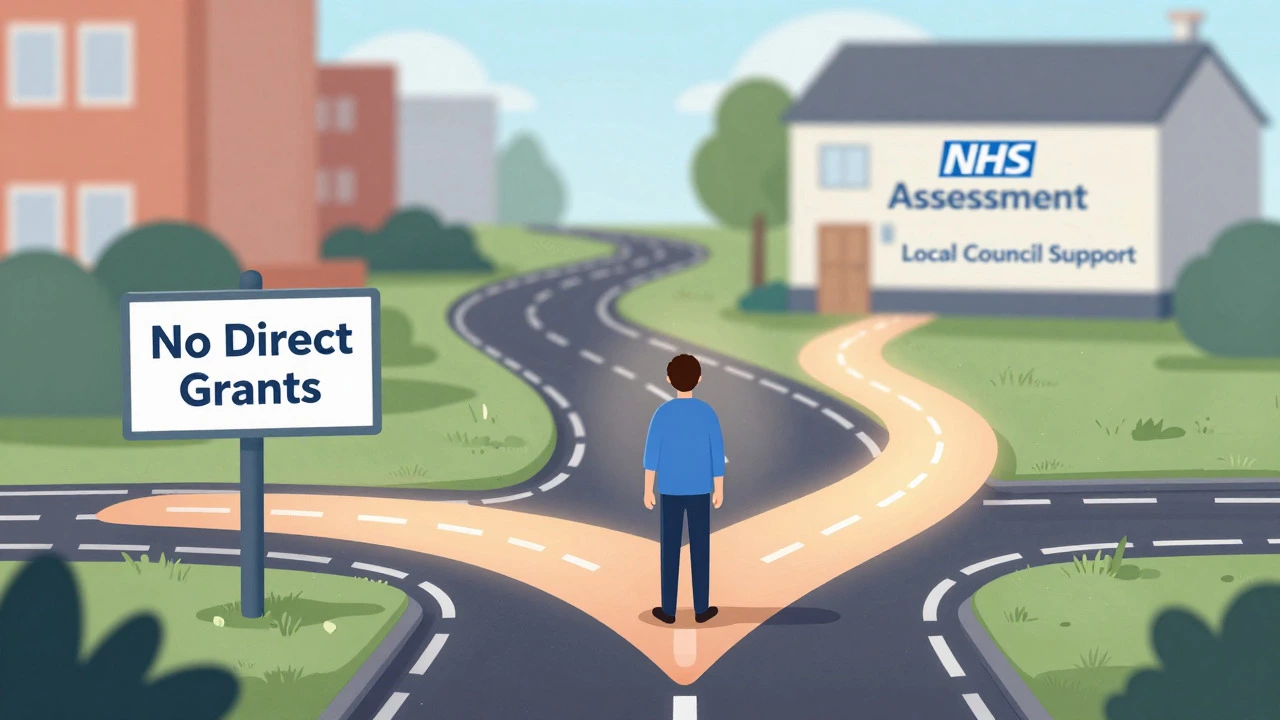
It is a common hope that if you need expensive medical treatment, the government will step in to pay for it. For many people facing the high cost of dental implants, this hope turns into a specific question: can I get a government grant? The short answer is no. There is no direct government grant scheme specifically designed to pay for dental implants for the average citizen. However, the reality is more nuanced. While you won't find a check in the mail from Westminster, there are pathways through the National Health Service (NHS) and local council support that might reduce your financial burden significantly.
If you are looking for a handout, you will be disappointed. But if you are looking for legitimate ways to access care without going bankrupt, you need to understand how the system actually works. This guide breaks down the hard truths about funding, the rare exceptions where the NHS does cover implants, and the alternative financial routes available in the UK as of 2026.
The Myth of the "Free" Dental Implant
Let’s clear up the biggest misconception first. The National Health Service (NHS) is the publicly funded healthcare system in the United Kingdom operates on a principle of clinical necessity, not cosmetic preference or convenience. Under current NHS guidelines, dentistry is divided into three bands of charges. Most routine treatments fall into these bands. Implants, however, are generally considered outside the scope of standard NHS provision.
Why? Because the NHS views bridges and dentures as clinically sufficient replacements for missing teeth. An implant is often seen as a premium option. Therefore, unless you meet very strict criteria, you will be expected to pay privately. The private cost for a single dental implant in the UK typically ranges from £1,500 to £2,500. For full-mouth rehabilitation, costs can exceed £10,000. Without a grant, this is a steep hill to climb.
When Does the NHS Actually Cover Implants?
While the rule is "no," the exception is "yes, but rarely." The NHS may fund an implant if they deem it the only viable clinical option. This usually happens in specific scenarios:
- Anatomical Constraints: If your jawbone structure makes it impossible to fit a traditional bridge or denture securely, an implant might be the only way to restore function.
- Trauma or Accidents: If teeth were lost due to significant trauma rather than decay or gum disease, some NHS trusts are more likely to approve implants.
- Cancer Treatment Aftermath: Patients who have undergone radiotherapy to the head and neck may require implants because other options could damage sensitive tissues further.
- Cleft Palate Surgery: In cases involving congenital conditions like cleft palate, implants are often part of the reconstructive surgical plan.
Even in these cases, approval is not guaranteed. It requires a specialist assessment. You cannot simply ask your GP for a referral; you need an NHS dentist to agree that no other treatment will work. If they do refer you, the wait times can be long, and the choice of materials may be limited compared to private care.
Local Council Support: The Closest Thing to a Grant
If the national government isn’t handing out cash for teeth, what about your local council? This is where many people find a glimmer of hope. Local authorities in the UK have discretionary funds to help residents with essential living costs. These are not "grants" in the sense of free money with no strings attached, but they are financial assistance schemes.
Two main types of council support might apply:
- Discretionary Housing Payments (DHPs): Primarily for housing costs, but occasionally used for essential health needs if you are already receiving Universal Credit or Pension Credit.
- Local Welfare Assistance Schemes (LWAS): Many councils run these schemes to help people in crisis. Some include "essential health costs" which can cover dental treatment.
To qualify, you usually need to prove that you have no savings, are on a low income, and that the dental treatment is urgent or essential for your health (e.g., you cannot eat properly). You must apply directly to your local council’s website. Be prepared to provide proof of income, bank statements, and a letter from your dentist explaining why the treatment is necessary.
| Funding Source | Availability | Requirements | Typical Coverage |
|---|---|---|---|
| NHS | Rare | Clinical necessity, no other options | Full cost covered (if approved) |
| Local Council LWAS | Limited | Low income, no savings, urgent need | Partial or full (discretionary) |
| Pension Credit | Wide | State pension age, low income | Free NHS dental care (not implants) |
| Private Finance | Universal | Credit check | 100% upfront, then repayment |
Who Gets Free NHS Dental Care?
Even if you don’t qualify for an implant under the NHS, you might qualify for free general dental care. If you fall into one of these groups, you pay nothing for NHS visits, which can help preserve your remaining teeth and prevent further loss:
- People aged 19 or under, or in full-time education.
- Pregnant women or those who have had a baby in the last 12 months.
- Recipients of certain benefits, such as Income Support, Income-based Jobseeker’s Allowance, or Income-related Employment and Support Allowance.
- People with an NHS tax credit credit certificate.
- Those over State Pension age who receive Pension Credit.
Note that even if you get free NHS care, this does not automatically mean you get free implants. It just means you aren’t paying for the check-ups and extractions. The implant itself remains a private expense unless the clinical exception applies.
Charitable Organizations and Grants
While the government doesn’t offer a blanket grant, some charities do. These are not always well-publicized, so you have to dig a bit. Organizations like Smile Train is a charity focused on cleft lip and palate surgery might help if your dental issues stem from a cleft condition. Other local charities, such as those supporting veterans or cancer survivors, sometimes have funds for dental rehabilitation.
You should also look into Turn2us is a leading charity providing grants and advice to people in financial hardship. They maintain a database of charitable grants. Search their site for "dental" or "health" to see if any small grants are currently open. These amounts are usually modest (£100-£500), so they won’t cover a full implant, but they might help with the initial consultation or bone grafting fees.

Alternative Financial Routes
If you hit a dead end with grants and council support, you still have options. Don’t let fear of cost stop you from seeking treatment. Poor oral health affects your overall well-being, including heart health and nutrition.
Payment Plans: Most private dental practices in the UK offer interest-free payment plans for treatments over a certain amount (usually £500). You pay a deposit and spread the rest over 6-12 months. This is the most common way people afford implants.
Dental Schools: Universities with dental schools, such as King’s College London or University of Manchester, offer treatment at reduced rates. Students perform the work under strict supervision by experienced clinicians. It takes longer, but it can save you 30-50% on the cost.
Medical Loans: Specialized loans for healthcare exist. Be cautious here. Read the terms carefully. Avoid payday lenders. Look for reputable finance companies that partner with dental clinics.
Steps to Take Right Now
If you need an implant and have limited funds, follow this path:
- Get an NHS Assessment: Even if you suspect you’ll need private care, start with an NHS dentist. Ask explicitly: "Is an implant clinically necessary for me, or is a bridge/denture sufficient?" Get this in writing if possible.
- Contact Your Local Council: Visit your council’s website and search for "welfare assistance" or "discretionary grants." Apply if you meet the income criteria.
- Check Charities: Use Turn2us or similar sites to find small grants.
- Shop Around Privately: Get quotes from three different private dentists. Prices vary wildly. Ask about payment plans.
- Consider Dental Schools: If you live near a university, call their dental hospital for a quote.
There is no magic grant waiting for you, but there is a path forward. By combining NHS assessments, local council support, and smart private financing, you can restore your smile without destroying your finances.
Is there a government grant specifically for dental implants in the UK?
No, there is no specific national government grant for dental implants. The NHS covers them only in rare cases of clinical necessity, and local councils may offer discretionary welfare assistance for essential health costs if you are on a low income.
Will the NHS pay for my dental implant?
The NHS will only pay for an implant if they determine that no other treatment (like a bridge or denture) is clinically viable. This is rare and usually reserved for cases involving trauma, cancer treatment aftermath, or severe anatomical issues.
How much does a dental implant cost in the UK privately?
A single dental implant typically costs between £1,500 and £2,500. Full mouth reconstruction can cost upwards of £10,000. Prices vary depending on location, the dentist's expertise, and whether additional procedures like bone grafting are needed.
Can I get a loan for dental implants?
Yes, many private dental practices offer interest-free payment plans. You can also take out personal loans or use specialized medical finance providers. Always compare interest rates and terms before committing.
Do dental schools offer cheaper implants?
Yes, university dental hospitals often charge 30-50% less than private practices. The treatment is performed by students under the close supervision of senior clinicians, ensuring high standards of care.